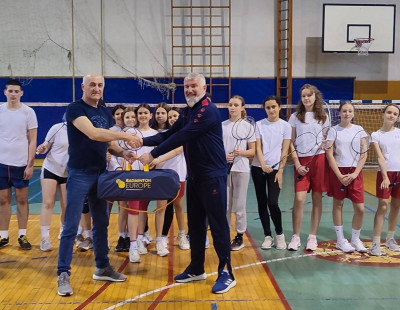


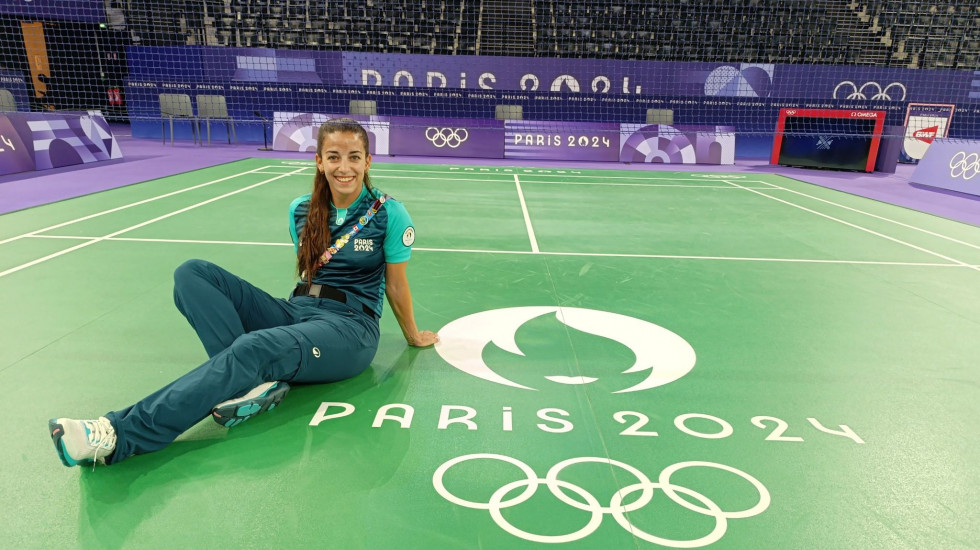
This is the 52nd story in our Humans of Shuttle Time series, in which we present the perspectives of those who are involved with badminton at the grassroots level. Laia Oset Moncho, Shuttle Time National Coordinator with Spanish Badminton Federation, speaks about her journey in badminton.
Childhood Days
I was born and raised in Barcelona, Spain, with my sister and parents. My father was a police officer and my mother was a physical education teacher, which made sports a key part of our childhood. I practised various sports such as basketball, swimming, rhythmic gymnastics and athletics, until I discovered badminton at the age of 11.
Tryst with Badminton
My first experience with badminton was during the World Police and Fire Games held in Barcelona in 2003. My parents volunteered at the event and they took me with them to watch some matches.
First Impressions
What struck me the most when I first saw badminton was the incredible agility and athleticism of the players. I was especially amazed by the powerful jumps they made and the sheer speed at which the shuttlecock moved across the court. It was unlike any other sport I had seen before.
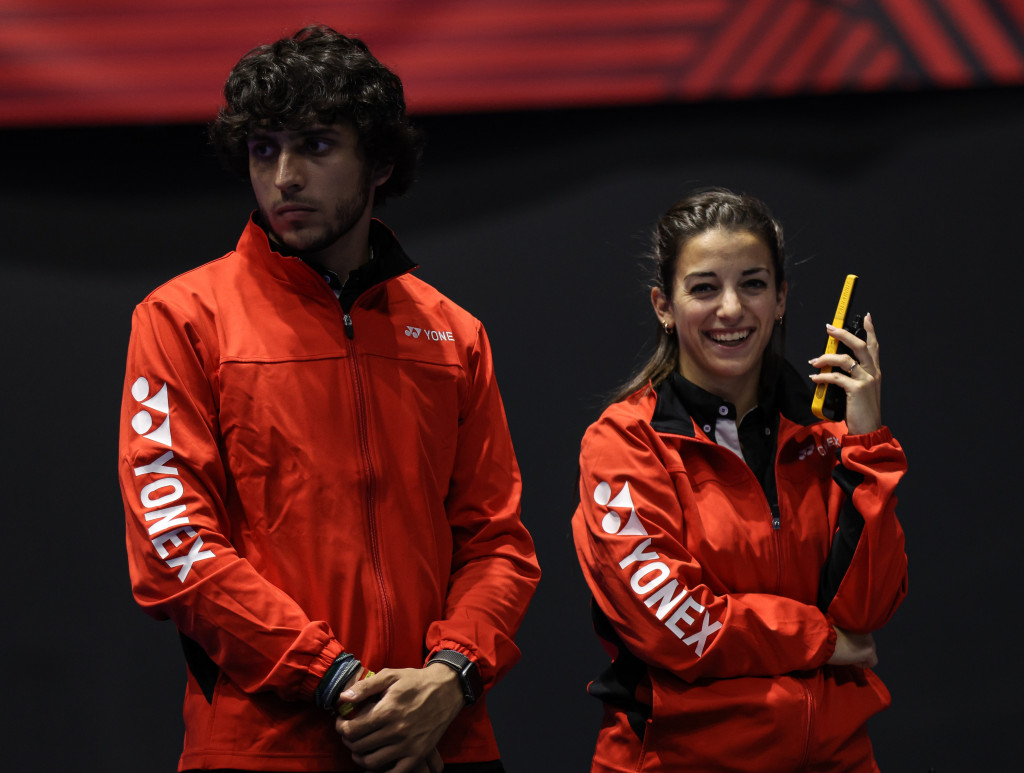
Moncho (right) at BWF World Junior Championships 2022 in Santander, Spain.
Relationship with Badminton
After that experience, I started playing badminton at the Autonomous University of Barcelona with a group of university students. There was only one other girl at my age, but I didn’t mind because I really enjoyed it. For a while, I practiced both badminton and basketball at the same time, but eventually, I chose badminton. I began competing at regional and eventually national and international levels, moving to the Technification Centre in Asturias at the age of 14. And then at 16, to the High Performance Centre in Madrid to join the national team. I competed in several international championships, with 2017 being my last year of “serious” competition. After finishing my studies and living in Italy for three years, I returned to Spain and started working at the Spanish Badminton Federation.
Memorable Events
Badminton has given me many memories and experiences that I will cherish forever, such as competing at the 2016 Uber Cup, working at the 2021 World Championships in Huelva, where I officially transitioned to the other side as an organiser rather than a player, and my recent experience as a volunteer at the Paris Olympics. On a side note, I met my husband through badminton, during an Erasmus+ programme in which I participated as a student. Many of my oldest friends are people I met through badminton.
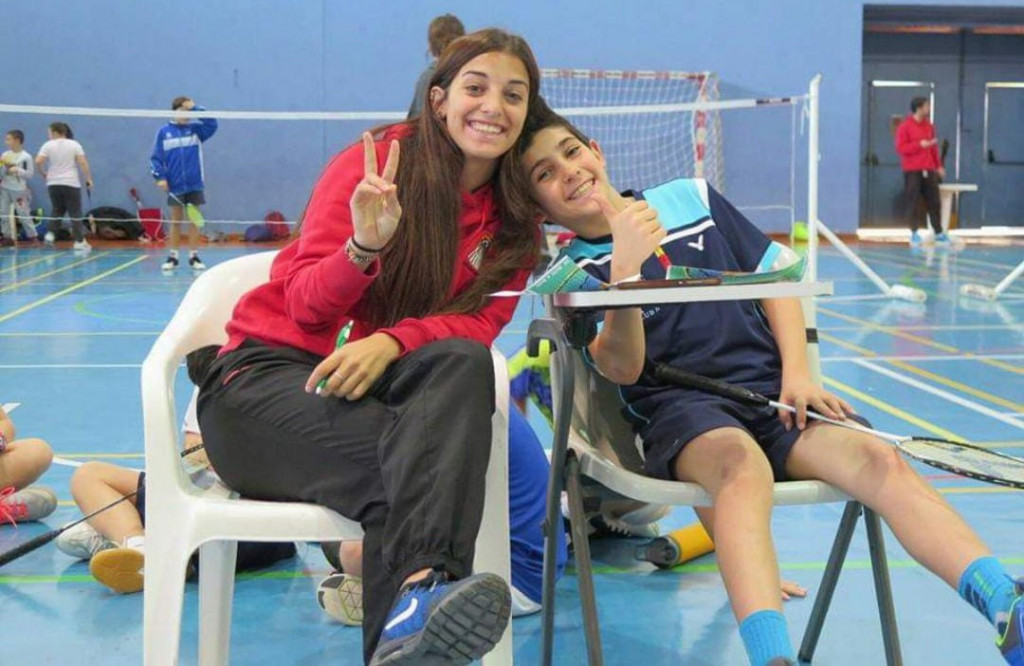
Moncho at a training activity.
What Badminton Means
For me, badminton has been my entire life, first as a player and now as part of my career. It has given me life lessons and experiences I wouldn’t have had otherwise, and it has shaped me into the person I am today. I consider myself very fortunate to still have this strong connection with the sport.
What Makes it Different
Badminton is a sport that, unlike many others, can be played at any age and level while still having fun. Once children are introduced to the sport, they love it. Additionally, in veterans’ championships, you can find people over 80 years old who continue to compete and enjoy the sport.
Developing Badminton in the Community
My first experience with Shuttle Time was in 2016, when I was living in Ibiza. Despite being a small island with a limited population, they did an outstanding job of promoting badminton, creating a network of schoolchildren who later turned into players. Some of them are now at the national centre in Madrid. During my time living in Italy, I took part in training courses for PE teachers, and I was pleasantly surprised by the enthusiasm and interest everyone showed. Now, at the federation, I coordinate the entire Shuttle Time programme with local clubs and schools, always striving to reach areas where badminton still lacks tradition or popularity. Based on my experience, I can emphasise how important it is to work at the grassroots level and in schools, and above all, to introduce our sport. Because once people discover badminton … there’s no turning back!
Impact of Shuttle Time in Spain
Shuttle Time has been, and continues to be, a vital programme for our country. As I mentioned earlier, it’s essential to introduce our sport at a young age, and this programme allows us to reach an immense number of children. In our country, where football and basketball are the most popular sports, it’s wonderful to give children the chance to discover less conventional sports like ours. Thanks to this, the entire development and training system is nurtured by the programme.
Lessons from Shuttle Time
I’ve learnt that anyone can play badminton. We have proved that badminton is inclusive, making it ideal for any child, regardless of their physical or social condition. I’ve also learned that if we can successfully share our passion with school teachers and children, in the long run, all these individuals will remain connected to our sport, and our national network will continue to grow.
Previous Stories in This Series
Humans of Shuttle Time: Aisarova Jasmin
Humans of Shuttle Time: Saygufron Davletov
Humans of Shuttle Time: Rafael Lora
Humans of Shuttle Time: Graham Berry
Humans of Shuttle Time: Alaa Mohamed Youssef Fathy
Humans of Shuttle Time: Raul Jara Tacora
Humans of Shuttle Time: Lerato Lepheane
Humans of Shuttle Time: Genelyn Lansangan
Humans of Shuttle Time: Paulo Jerome Niniano Quidato
Humans of Shuttle Time: Josefa Matasau
Humans of Shuttle Time: Richard Gregory Wong
Humans of Shuttle Time: Alessandro Redaelli
Humans of Shuttle Time: Veronika Protassova
Humans of Shuttle Time: Robbert De Keijzer
Humans of Shuttle Time: Carolina M Vaughn
Humans of Shuttle Time: Sam Paterson
Humans of Shuttle Time: Deki Tshomo
Humans of Shuttle Time: Hadeel Mohammad Alomari
Humans of Shuttle Time: Daiverson Ferrari Rodrigues
Humans of Shuttle Time: Ammar Awad
Humans of Shuttle Time: Carolin Ruth
Humans of Shuttle Time: Caroline Brial
Humans of Shuttle Time: Danny Ten
Humans of Shuttle Time: Mohlala Mopeli
Humans of Shuttle Time: Tatiana Petrova
Humans of Shuttle Time: Levente Nagy-Szabó
Humans of Shuttle Time: Kumon Tarawa
Humans of Shuttle Time: Didier Nourry
Humans of Shuttle Time: Joseph Devenecia
Humans of Shuttle Time: Su Ying Lau
Humans of Shuttle Time: Erin Walklate
Humans of Shuttle Time: Bukasa Mukoma Marcel
Humans of Shuttle Time: Luis Fernando Montilla
Humans of Shuttle Time: Artur Niyazov
Humans of Shuttle Time: Galkhuu Zulbaatar
Humans of Shuttle Time: Zuzana Rajdugova
Humans of Shuttle Time: Milan Barbir
Humans of Shuttle Time: Nargis Nabieva
Humans of Shuttle Time: Hannes Andersson
Humans of Shuttle Time: Merlie Tolentino
Humans of Shuttle Time: Nikhil Chandra Dhar
Humans of Shuttle Time: Geoffrey Shigoli
Humans of Shuttle Time: Erik Betancourt Luna
Humans of Shuttle Time: Richard Ssali Kaggwa
Humans of Shuttle Time: Azizbek Madjitov
Humans of Shuttle Time: Elie Jean
Humans of Shuttle Time: Danielle Whiteside
Humans of Shuttle Time: Oscar Alejandro Vera Suarez
Humans of Shuttle Time: Sandra Low
Humans of Shuttle Time: Genevieve Cutter
 BWF Newsletter