

Badminton is entering a new phase of evolution as the sport adapts to the changing expectations of modern audiences, broadcasters and players.
In response, the BWF Council has proposed the adoption of a 3×15 scoring system – three games to 15 points – as the official scoring format for international badminton.
Following extensive testing and consultation, BWF believes the 3×15 system offers a strong and sustainable foundation for the sport’s future. The proposal reflects a long-term commitment to innovation, player welfare and the continued support for players in their pursuit of excellence, enabling them to enjoy longer, more successful careers in the sport.
To identify the most effective scoring system, BWF conducted comprehensive testing and analysis across multiple formats. Several performance and entertainment indicators were assessed, including:
- Winning probability
- Match duration
- Game closeness
- Number of high-pressure or “exciting” points
After reviewing the data, the results were clear. The 3×15 format consistently outperformed both the current 3×21 system and the alternative 5×11 format across nearly all key metrics.
▶ Watch the explainer video:
Why 3×15 Works
More Exciting and Competitive Matches
Shorter games create more close-score scenarios and a higher frequency of critical moments, increasing overall suspense and intensity.
Faster Progress to Decisive Points
Players reach ‘endgame’ situations sooner, maintaining a strong match tempo and keeping audiences engaged throughout.
Shorter and More Predictable Match Durations
A reduced number of points leads to improved scheduling certainty, smoother tournament operations, and more consistent broadcast windows, while also supporting player recovery and reducing cumulative fatigue.
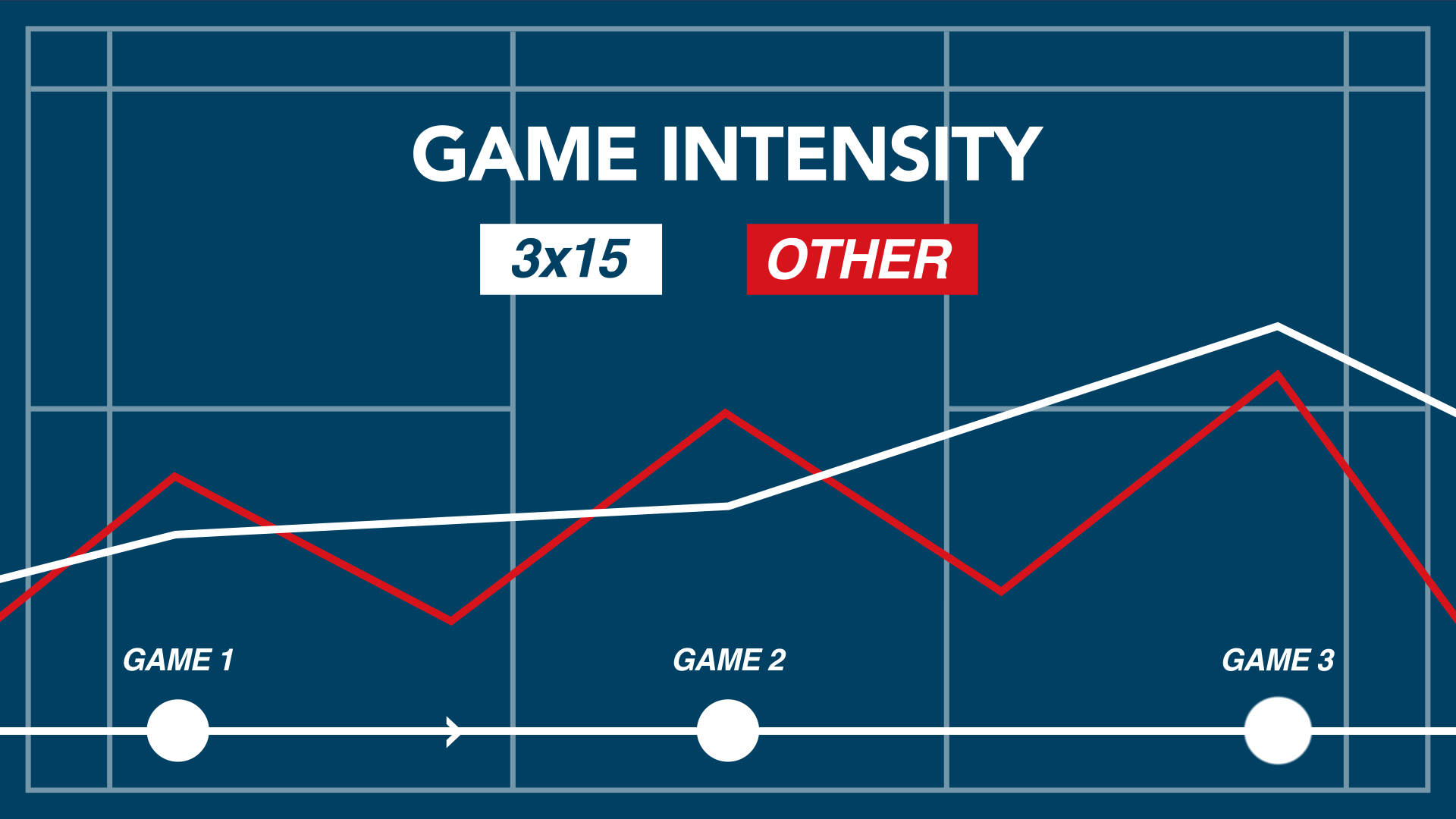
More ‘exciting points’ increases overall match suspense.
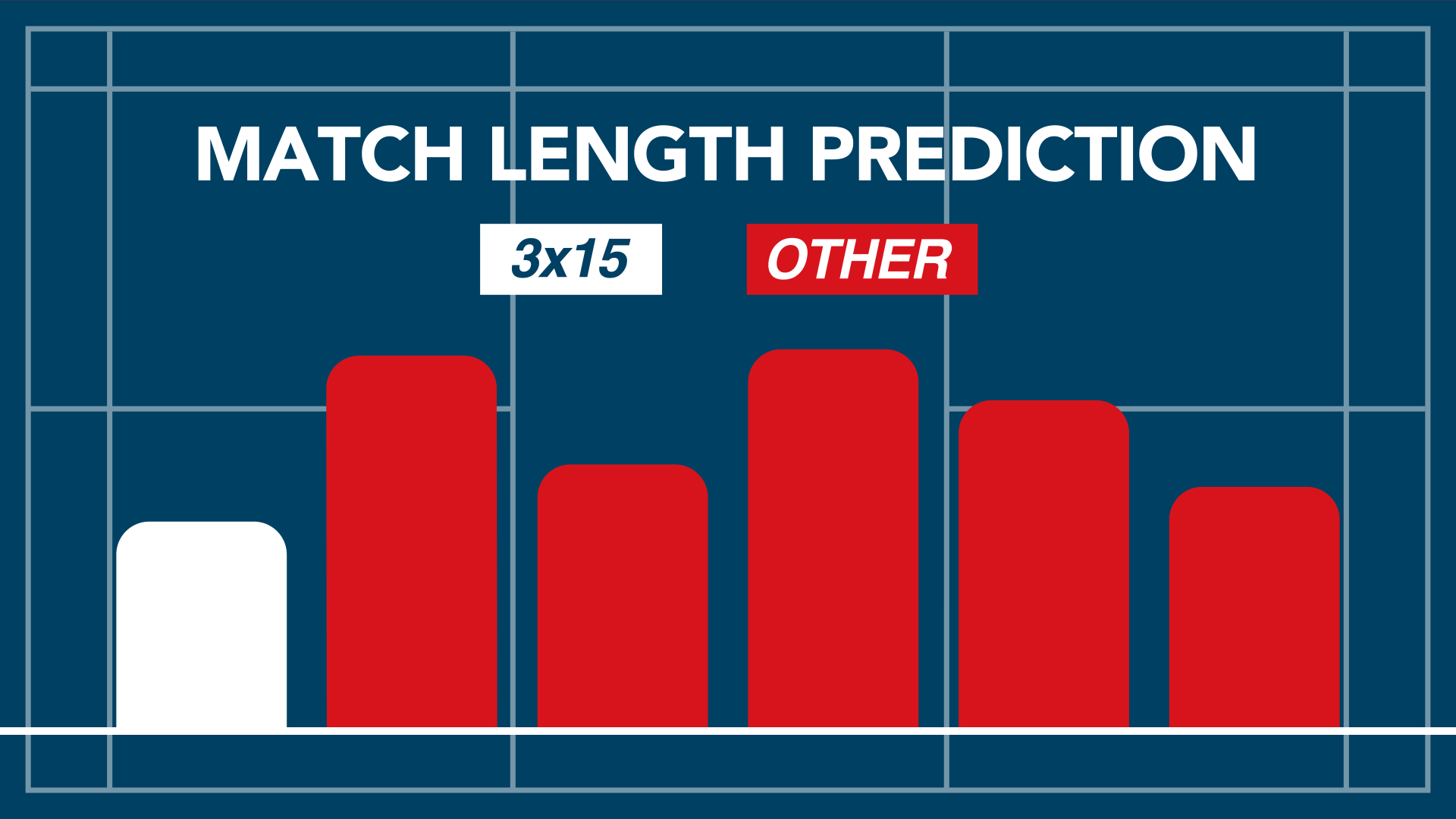
Reduced number of points helps improve scheduling.
Benefits Across the Sport
Fans & Broadcasters
- A more dynamic viewing experience
- Sustained player intensity and performance levels
Tournament Hosts
- More efficient scheduling and operational planning
- Improved spectator engagement
Players
- Reduced physical load and fatigue
- Lower injury risk
- Greater longevity and energy per rally
Technical Officials
- Less fatigue over long tournament days
- More consistent decision-making and performance
What do the players and experts say?
We spoke to several current and former players, as well as coaches and commentators, on their thoughts on the proposal.
▶ Watch editorial video:
Steen Pedersen – BWF Commentator
“I think it’s super important we sort of stay relevant and adapt to the times we are living in, which seems to sort of promote a shorter attention span. And I hope badminton fans already enjoying the current system will also find joy in an eventual new scoring system, and that the new scoring system then has the potential to attract some new fans and, sort of be able to engage more people around the world in badminton, that will be a fantastic outcome.”
Dr. Niels Christian Kaldau – Chair of BWF Medical Panel
“There are so many factors that can influence injuries and load is definitely one of them, but again we don’t know because the game probably changes when we make a reduction of the points in every game and that can influence how the players train in the future, so it’s very hard to say. But of course, you can say that playing less time will probably reduce fatigue and could lead to less overload injuries, but we don’t know.
“The shorter matches, they will make the daily schedule shorter and that can help the players have more time for restitution. And that’s very good for the players, if they can get back to the hotel earlier, they can start their physio or massage, they can get their dinner earlier, maybe sleep a little bit longer, so that’s something that is very important for recovery in general. And it can have positive implications on the injury burden definitely, but again we don’t know.”
Pusarla V. Sindhu – BWF Athletes’ Commission Chair
“Well, innovation is absolutely needed. But it has to be meaningful. Having said that, I think we should always look at how to improve sport for players, fans, broadcasters and commercial partners. But not every change is progress. So, my overall feeling would be like, let us innovate, but let us make sure we are solving the right problem.
“From my discussion with the players, the feedback has genuinely been mixed. But if I look at the overall sentiment across the athletes, as spoken to, the majority still feel that the 21-point system is better for badminton.
“So, I think some players do see positives in 15 points, three sets as well. Especially, in terms of shorter matches, but the broader feeling is that 21 points gives the sport more of its charm, rhythm and tactical depth.”
Chen Yu Fei – Olympic Gold Medallist
“Personally, I support the three-game, 15-point scoring system. With the 21-point system, matches can sometimes last 80 or even 90 minutes, which is quite demanding on your physicality. If it’s 15 points, the matches will be shorter, but I think the intensity would be higher and the rallies might be more exciting.
“I think with the 15-point system, the pace would be faster. Right now, we don’t really know what it will feel like in actual matches, but if the pace increases, the physical demand might also go up. The 15-point format could also bring more unpredictability on court. For me, that could be one of the reasons that motivates me to keep competing.”
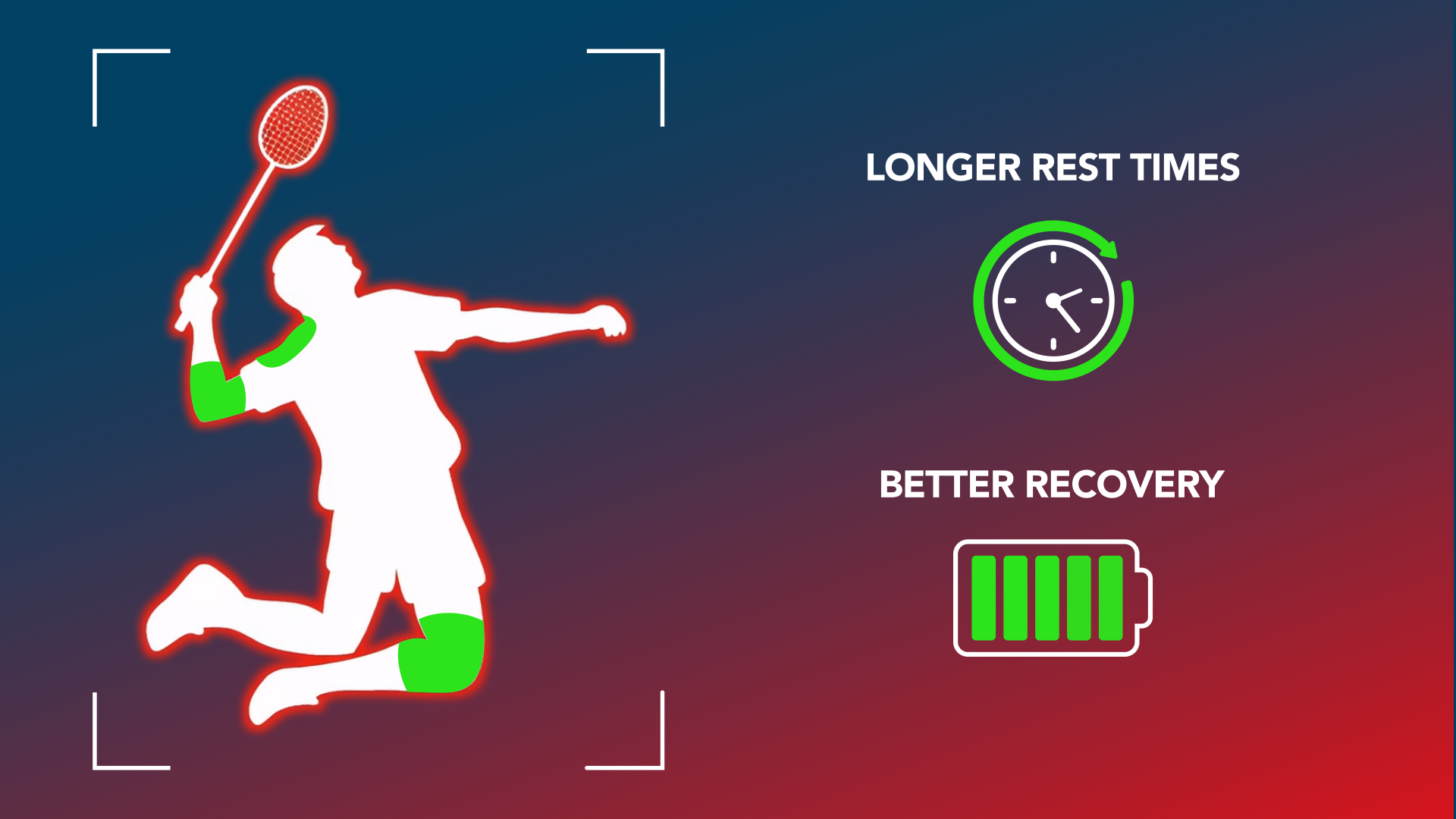
Better recovery between matches.
The proposal will be put forward for a membership vote at the BWF Annual General Meeting on Saturday, 25 April 2026, in Horsens, Denmark.
If approved, the new scoring system will come into effect on 4 January 2027.
 BWF Newsletter