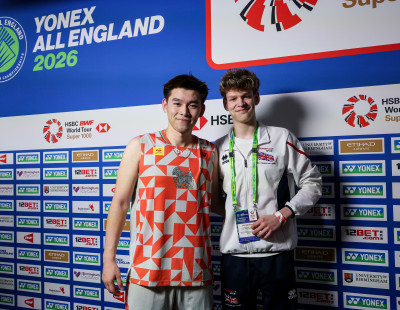


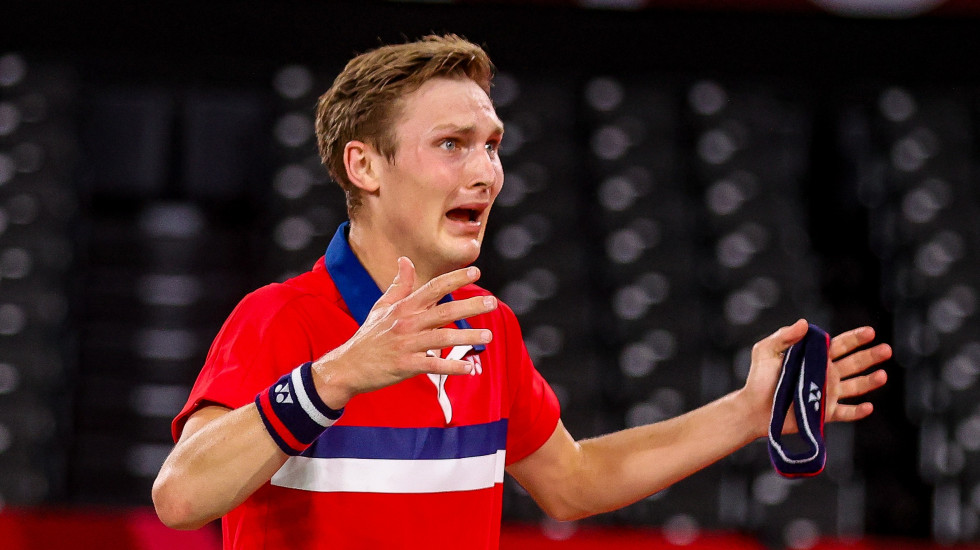
Viktor Axelsen: twice Olympic champion; twice world champion; unmatched resume. Also: the ultimate problem-solver of his era.
There was no problem on court, technically, physically or otherwise, that Axelsen ultimately didn’t figure out a solution to.
And that was why, despite the length of his last injury layoff, he was expected to be back, strong as ever, with a shot at LA28 on the horizon.
The announcement of his retirement, however, put paid to those hopes. The retirement certainly marked a premature end to a matchless career.
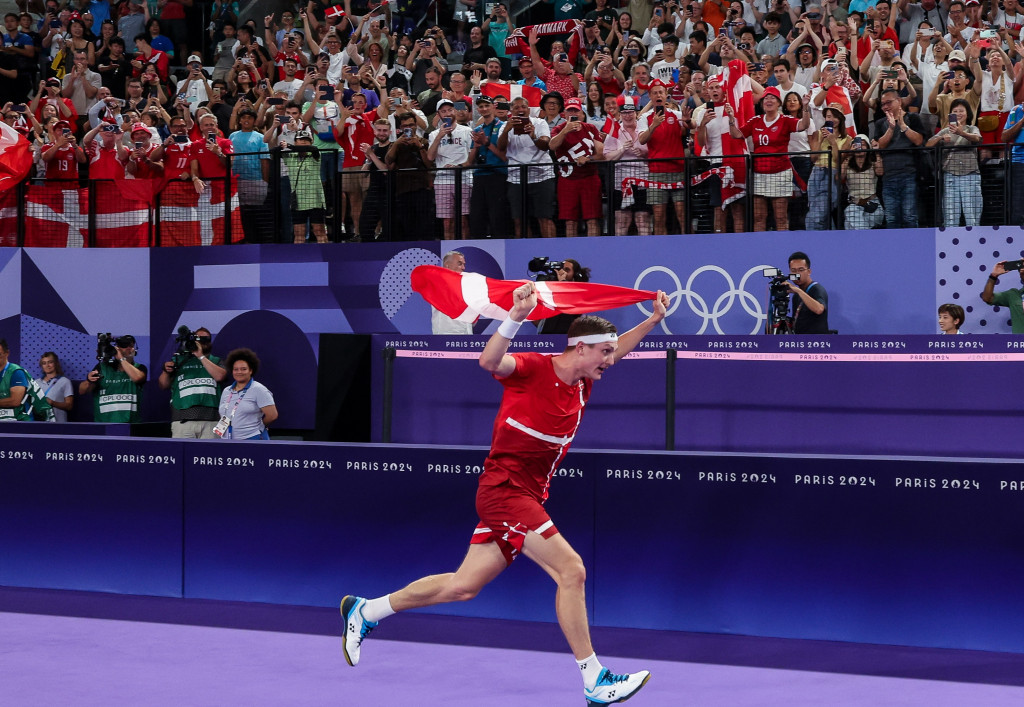
Axelsen after defending his Olympic gold.
Axelsen retires with one of the most complete resumes in badminton – double Olympic champion, twice world champion, winner of every other major title, and a fixture in the top 10 for over a decade. Over and above his sporting accomplishments, he will be a beacon to those seeking to go beyond the limits of their abilities; to dive deep and explore every alleyway for the realisation of a dream.
He was talked about even before he became world junior champion in 2010. The transition to the senior ranks was quick and seamless – by the time he was 18, he was already in his first Superseries final.
His lanky frame stood out – it was unusual in singles, certainly at the elite level, for players over 1.8m or thereabouts to perform consistently, for there are many areas to exploit. There just had been no precedent.
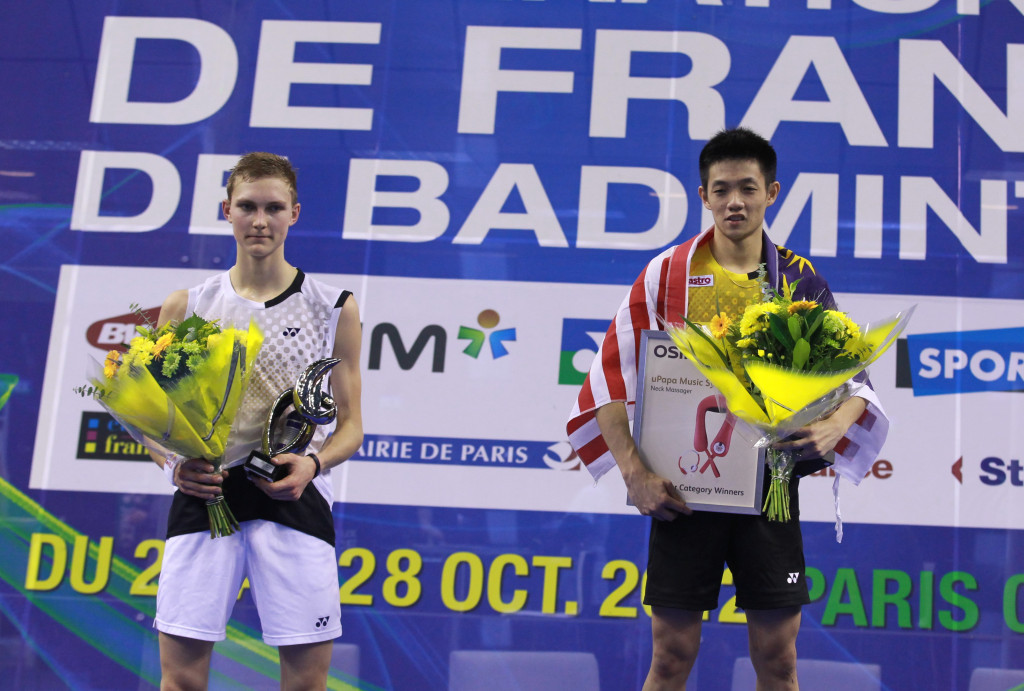
A teenaged Axelsen after his first Superseries final against Liew Daren in 2012.
And that, perhaps, was among the earliest problems he had to solve – he was often told, he later recalled, that he was “too tall” for badminton.
If there was one lesson that Axelsen offered, it was that he would leave no stone unturned in his quest to be the best he could be. He set no store by precedent – he would make his own path. And so it was that, technically and physically, he built a game, brick by brick, that would stand him in good stead against opponents of all styles and reputations, in all conditions.
As he grew into his 20s, his lanky frame firmed up with sculpted muscle, helping him handle those repeated lunges to the front and sides and build a stable, sometimes spectacular, defence to go with an attack that was devastating in its power and precision.
There was one lacuna in the early part of his senior career that would bother him – his inability to convert finals into titles. Over his first four years on the Superseries circuit, he made five finals and finished second-best every time. Sometimes the mental disintegration was obvious – such as the India Open 2015 final against Kidambi Srikanth, when he seemed to blank out at 12-all in the third, allowing his opponent to sprint past with nine straight points.
It would take him a while to figure out, but once he’d won his first Superseries – the World Superseries Finals 2016 against Tian Houwei – Axelsen became a far more confident player. In the next 42 finals at the Superseries/World Tour, World Championships and Olympics, he would lose just seven.
He was to showcase this mental strength at his first Olympics in 2016, when he beat no less a colossus than Lin Dan for the bronze medal. A year later he was to beat Lin Dan again, in the final of the World Championships.
There can be no better example of his ability to figure out solutions than the aftermath of the European Championships 2021. Forced to withdraw from the final after testing positive for COVID, and facing the prospect of a long quarantine in Kiev that would affect his Olympic preparations, Axelsen came up with an ingenious solution – he got himself transported home by air ambulance, returning to his home base to stay on track in training. He would win gold at Tokyo 2020 without dropping a game.
Significant as his on-court achievements were, Axelsen was way ahead of his time in other respects. His move to Dubai to train independently was a move unheard-of until then; it brought into focus what being professional really meant. His ability to converse in Mandarin – he was able to handle TV interviews within a couple of years of taking up the language – was a revolutionary shift in the sport, for it not only gave him insights into a different culture, sporting and otherwise; it also brought him direct access to a massive fanbase, and inspired other players to reach out across cultures. His business ventures, such as the development of a nutrition brand, was another aspect of his multi-faced personality. Even while being a top badminton player, Axelsen was about much more than badminton.
Before Paris 2024 came another setback. Having suffered a back injury weeks earlier, and on painkilling injection, he would once again claim gold without losing a game.
Axelsen achieved a complete resume in spite of the serious injuries of the ankle, foot and back that flared up in the second half of his career. For sheer attention to detail, maximisation of talent and creation of opportunity, he was in a league by himself. He had abundant ability to begin with; but Axelsen wasn’t content with being just another good player – he had to go far beyond. He retires as an all-time great.
 BWF Newsletter