

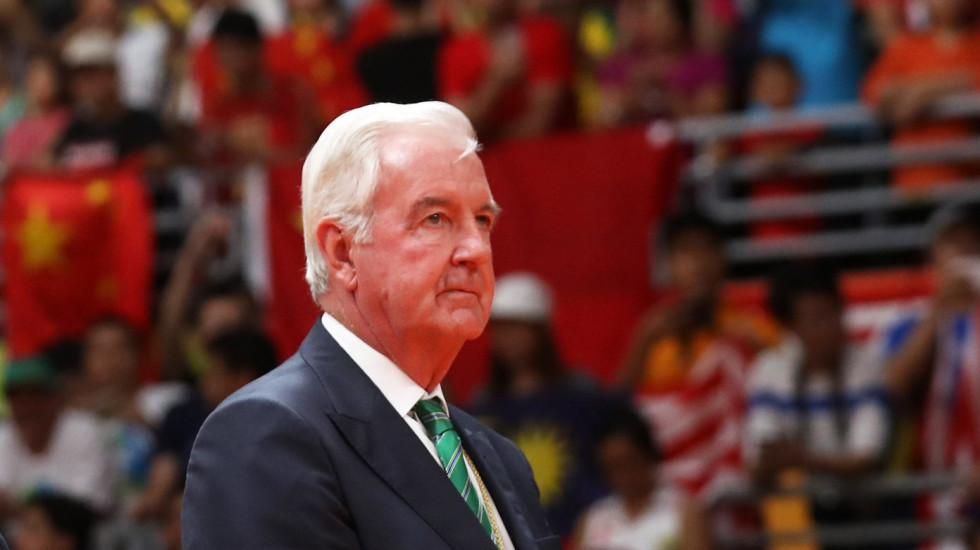
A defining moment in badminton’s journey to the Olympic stage happened in Rome in 1982. Sir Craig Reedie, then President of the International Badminton Federation, had sought an appointment with Juan Antonio Samaranch, President of the International Olympic Committee, on the sidelines of an IOC Session.
The discussion was about badminton’s Olympic status. As Reedie recounted it later in his autobiography, at the end of the 45-minute meeting during which he expounded on the merits of badminton’s inclusion, Samaranch left his desk and produced a small gift.
“He then said: ‘When are your next World Championships?’ I told him that they had been allocated to Denmark in May 1983. ‘I will come,’ he said.”
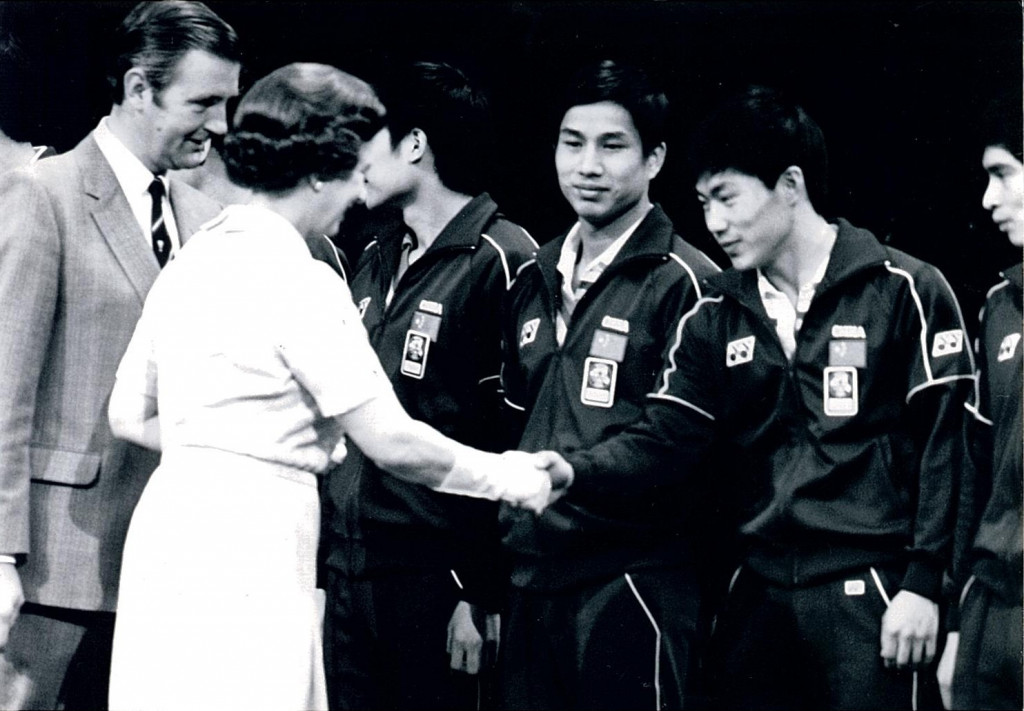
Reedie introduces Queen Elizabeth II to the Chinese team for the Thomas Cup in 1982.
Samaranch would attend the World Championships final in Copenhagen between Liem Swie King and Icuk Sugiarto, and the experience convinced him that badminton deserved a place in the Olympic programme. The official announcement came in 1985; at the next Olympics in 1988 badminton was staged as an exhibition sport. Finally, Barcelona 1992 saw badminton welcomed on the Olympic programme.
The episode in Rome shows how central Reedie was to one of the most significant happenings in badminton’s history.
His badminton journey had started as a player with Scotland, but it was as administrator that he was to guide badminton to new territory. The Scottish Badminton Union had started the World Invitation Tournament in Glasgow in 1951; once he joined the SBU in 1964, he would continue to build the profile of the tournament into a sought-after tournament for top players.
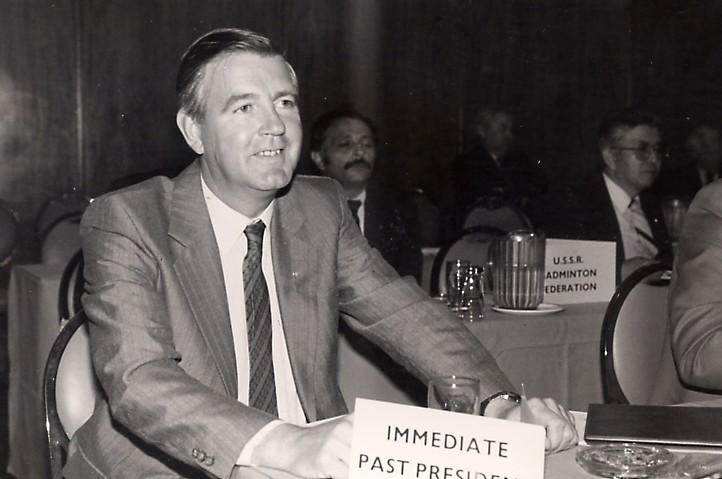
Reedie at the 1985 Annual General Meeting of the IBF.
Becoming President of the SBU (now Badminton Scotland) aged just 36, a significant achievement was in finding a disused paint factory in Glasgow in 1979 and transforming it into the community badminton facility which still serves the city today.
After being Vice President of the European Badminton Union (now Badminton Europe) from 1974-80, Reedie was to become in 1981, aged 40, the youngest IBF President to date.
He was among those closely involved in achieving the reunification of the IBF following an internal split in 1979. The reunification happened two years later, following which he became IBF President.
In this role he steered the ship to safe waters, first by building a relationship with the IOC and its President, and then with far-reaching innovations.
He championed the cause of the licensed player (enabling them to keep their prize money), which brought to an end the amateur era, and was pivotal in establishing in 1983 a Grand Prix circuit, which was to be the forerunner of today’s BWF World Tour.
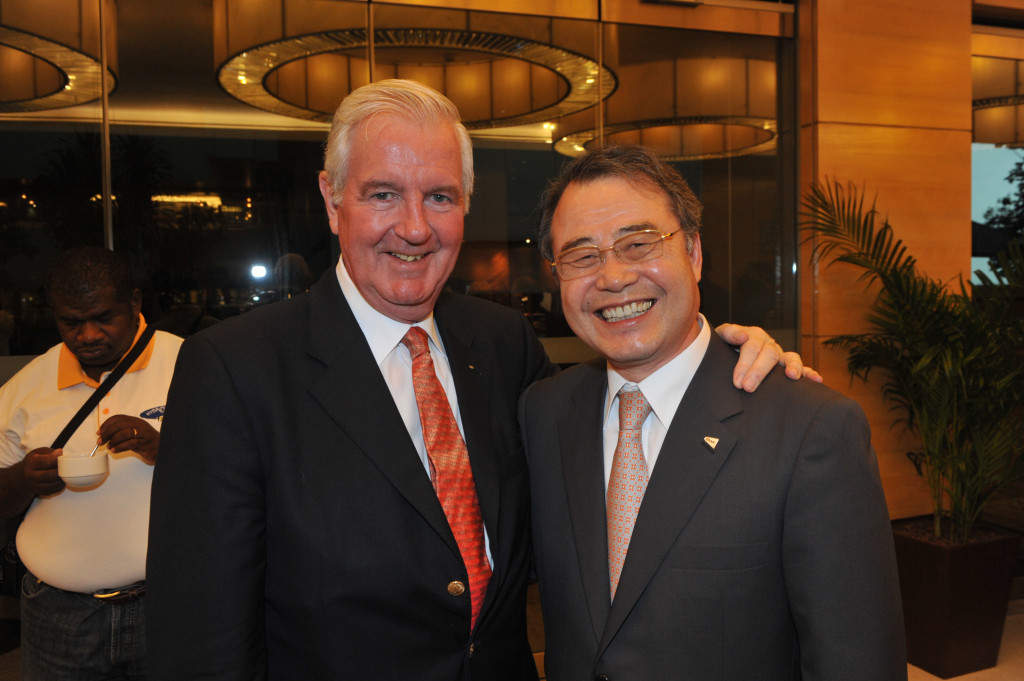
Reedie with former BWF President Kang Young Joong in 2013.
Reedie was the driving force behind more frequent World Championships (they are now held every year except during an Olympic year) and the streamlining and synchronising of the Thomas and Uber Cup team competitions.
The World Mixed Team Championships for the Sudirman Cup was also introduced as the sport rapidly become more alluring to sponsors and television, where he extended his many talents to include TV commentating.
A new world ranking system was also introduced to determine event qualification, initially for Olympic Games inclusion, and to generate more media interest.
It wasn’t just about developing tournaments. As former IBF General Secretary Ronnie Rowan said: “One of the most important committees was founded. The Development Committee had a small, slow beginning but played an important part in spreading the knowledge of the game around the world.
“Badminton’s inclusion in the Olympics meant the sport could benefit from monies for development from the IOC’s Olympic Solidarity Fund, which gave money to sports for development purposes.”
This helped IBF develop the sport in Africa and South and Central America.
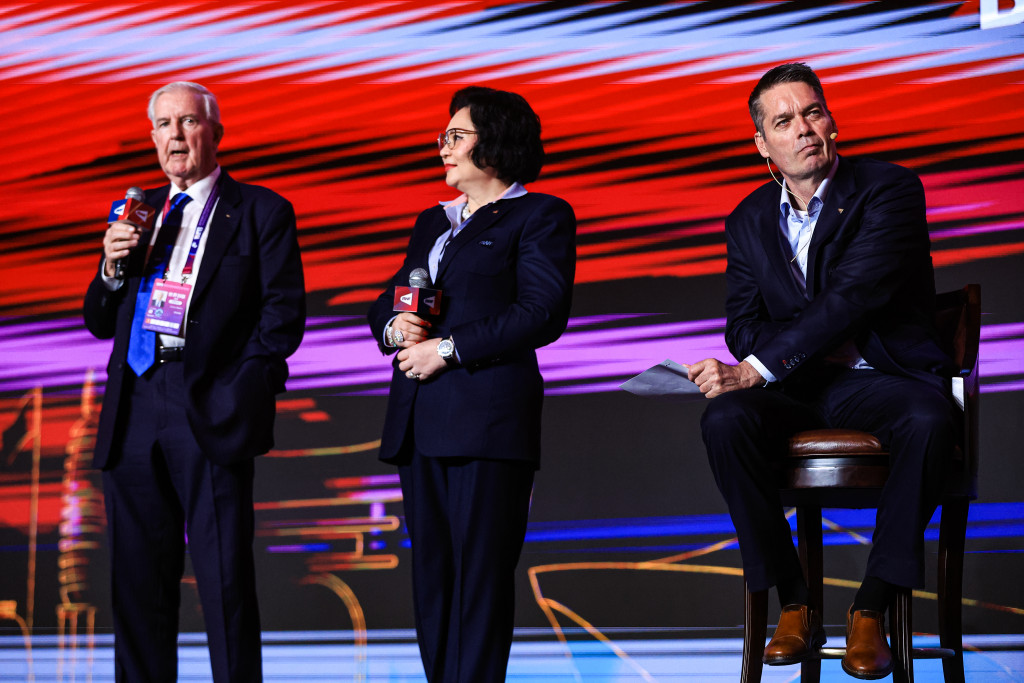
Reedie with BWF President Khunying Patama Leeswadtrakul and former BWF President Poul-Erik Høyer.
After serving as IBF President, Reedie would move on to take up leadership responsibilities with the British Olympic Committee, the IOC and the World Anti-Doping Agency (WADA), all of which he served with distinction.
His efforts brought worldwide recognition. He was honoured by BWF with the Herbert Scheele Trophy and entry into the BWF Hall of Fame. In recognition of his service to the Olympic Movement, he was awarded the Olympic Order in 2023 at the 141st IOC Session in Mumbai. He was also honoured by the British Crown: he was appointed Commander of the British Empire (CBE) in 1999, knighted as a Knight Bachelor in 2006, and later elevated to Knight Grand Cross (GBE) in 2018.
 BWF Newsletter