

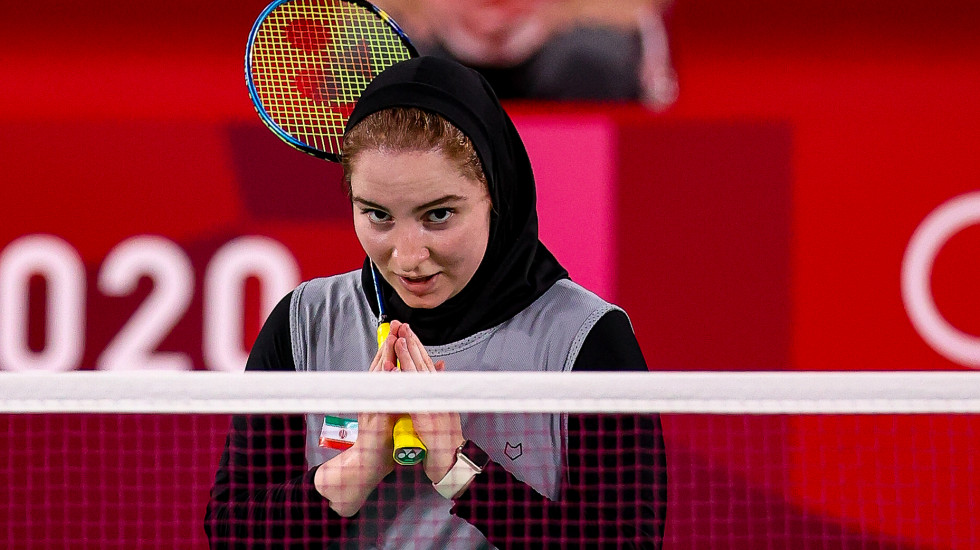
When Soraya Aghaeihajiagha stepped onto the Olympic stage at Tokyo 2020, she became the first Iranian woman to compete in badminton at the Games.
Five years later, her influence in sports continues to grow beyond the court.
In December, the International Olympic Committee (IOC) President Kirsty Coventry appointed Aghaeihajiagha as one of five new members of the IOC Athletes’ Commission ahead of the 2026 Winter Olympics in Milano Cortina.
On International Women’s Day, marked annually on 8 March, BWF celebrates her story through the lens of this year’s theme: #GiveToGain.
Giving Before Gaining
Ask Aghaeihajiagha what drew her toward leadership and she does not speak about ambition in the conventional sense.
“What inspired me most was the understanding representation truly matters,” she said. “Leadership for me is not about position. It’s about responsibility.”
Throughout her playing career, she became increasingly aware of the impact visibility can have. For many young girls, seeing someone with a similar background reach the highest level of sports can change what feels possible.
Where some athletes step away from the sport after competing, Aghaeihajiagha chose to step further in – contributing her voice and experience so others might find opportunities that once felt out of reach.
“If we widen those doors,” she said, “others will walk through them.”
One Person Challenging an Assumption
Badminton has not traditionally been among the most visible sports in Iran and Aghaeihajiagha’s pathway to the Olympics was far from straightforward.
She progressed in a developing system, building her career step by step as the sport itself gradually grew. That experience shaped the resilience she now brings to her role as an advocate for athletes.
“When I started dreaming of the Olympics, many people thought it was unrealistic,” she said. “But progress often starts with one person challenging an assumption.”
Her message to young women in Iran and beyond is direct: their background does not define their limits.
“They belong in sport,” she said, “and they belong in leadership.”
Structure, Not Symbolism
Within the IOC Athletes’ Commission, Aghaeihajiagha hopes to focus on issues she believes require lasting structural change rather than symbolic gestures. Mental health support for female athletes, safeguarding, fair access to resources and meaningful long-term development beyond sport are among her priorities.
“True equity is not symbolic,” she said. “It requires structural commitment.”
She also knows the Commission’s reach goes beyond badminton and Aghaeihajiagha brings perspectives shaped by her experiences in the Middle East and in Muslim-majority societies.
“When different experiences are represented in leadership and decision-making,” she said, “conversations become more complete and grounded in reality.”
Legacy Built on What Comes Next
To the young women watching from Tehran or Tokyo or anywhere in between, Aghaeihajiagha keeps it simple: “Stay curious and courageous. Compete with passion but also educate yourself. Understand governance, ask questions and do not wait for permission to contribute.”
Asked about the legacy she hopes to leave, she does not reach for big, dramatic language.
“If, years from now, more young women from diverse backgrounds feel confident stepping into leadership roles because they saw someone do it before them,” she says, “that would mean I contributed in a meaningful way”.
In many ways, that idea captures the spirit behind #GiveToGain: creating opportunities today for others can go further tomorrow.
 BWF Newsletter