

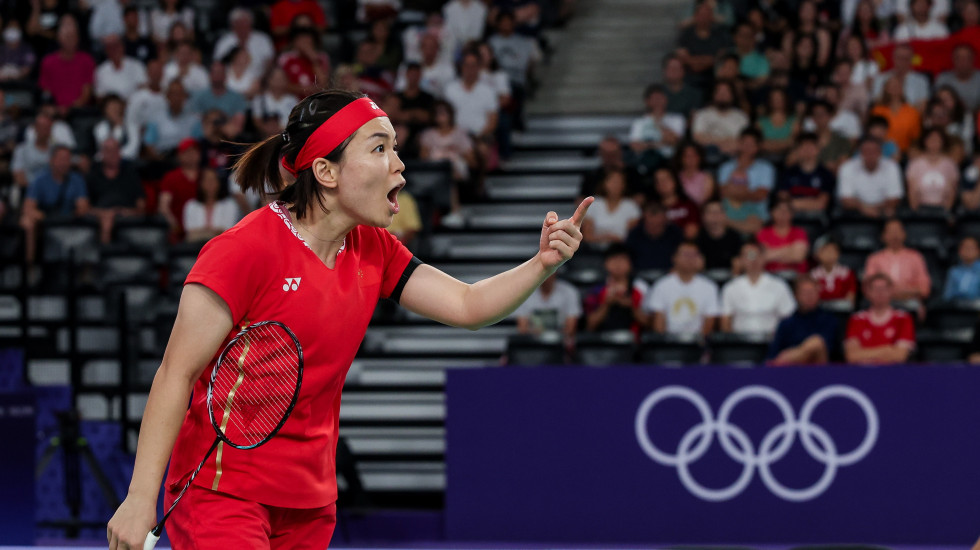
Chen Qing Chen bade farewell to her international career recently, secure in her legacy as an all-time great.
Chen burst on the international scene while just 15, with a mixed doubles bronze at the World Junior Championships 2012. That was the first of seven individual medals – including five gold – that she would win from four editions of the World Juniors.
In many ways, her performance at the World Juniors was an accurate predictor of what would unfold in her senior career that she shared with several of the same teammates – chiefly her women’s doubles partner Jia Yi Fan, and until midway in her career, her mixed doubles partner Zheng Si Wei.
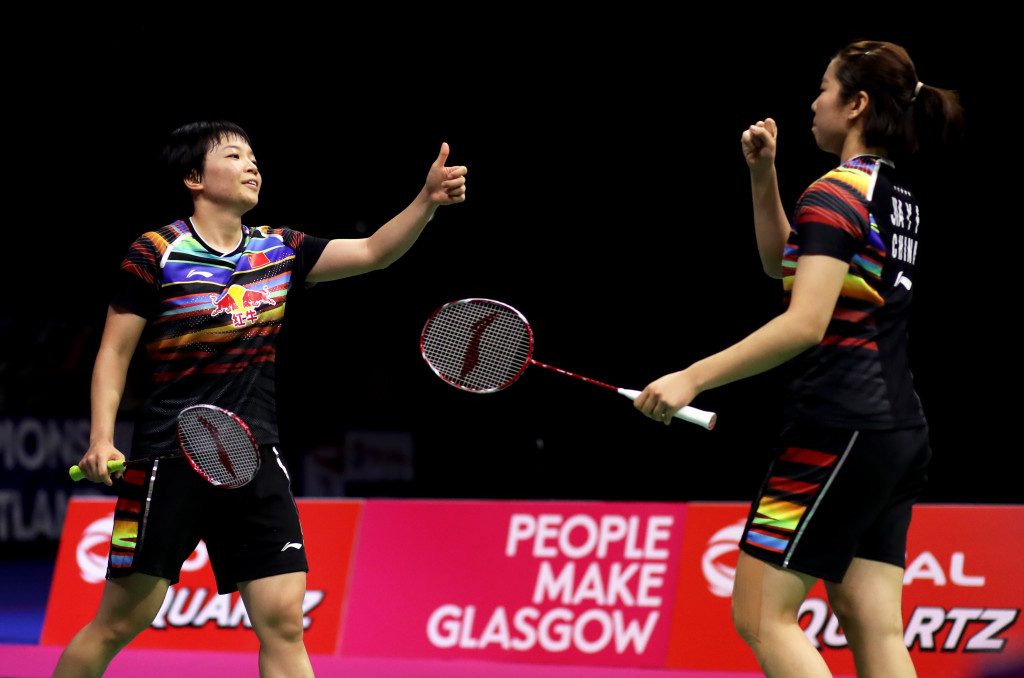
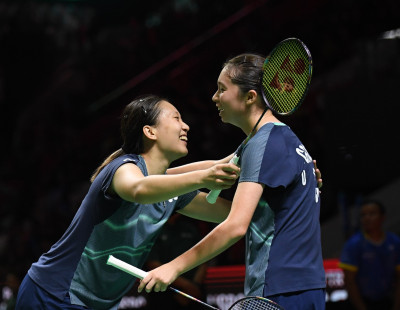
Chen and Jia on way to their first World Championships gold.
Chen was a bustling, powerful presence who could never be counted out no matter how desperate the situation. There was a forcefulness of character that shone through, and she would establish herself, in both her partnerships, to be extraordinarily hard to pin down. The transition to elite senior level was seamless; following the retirement of Zhao Yunlei after Rio 2016, Chen was reckoned to step into her shoes, although she was a different type of player.
And while she was successful early on – she won a double at the Dubai World Superseries Finals 2016, for instance – the enormity of the physical toll became obvious at the 2017 Sudirman Cup Finals. Chen played two draining matches in a semifinal against Japan that finished late, leaving her vulnerable for the final against Korea the following day.
The Koreans’ upset of China – breaking a run of six straight titles – would eventually force a relook, although Chen did play two events at the World Championships that year, winning gold in the women’s doubles and silver in the mixed.
Soon after, she would focus only on women’s doubles, and that was to lead to her greatest triumphs.
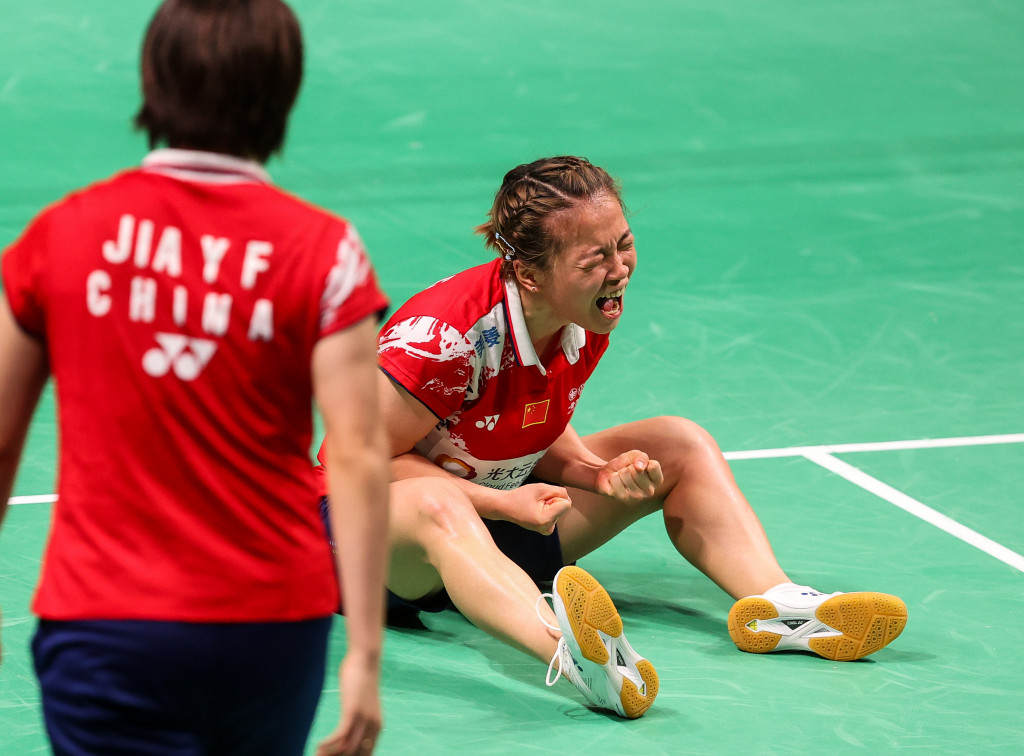
One of her greatest wins – the Uber Cup final in 2021.
The major titles started to come one after another – Asian Games gold (2019, 2022); Asian Championships (2019, 2022), and as many as 19 World Tour titles, which added to the 12 Superseries crowns she’d won earlier.
Chen and Jia were among the favourites for gold at Tokyo 2020, but an inspired performance by Greysia Polii and Apriyani Rahayu stopped them. Instead of getting deflated, the loss led to them digging deeper than they ever had – the earliest evidence of this was in the Uber Cup final later that year, when, playing Yuki Fukushima and Mayu Matsumoto, Chen featured in one of the greatest displays of resolve in the face of adversity. The score, 29-27 15-21 21-18, and lasting nearly two hours, showed a version of her that was even more fiercely competitive than before, and that was to define the rest of her career.
In this phase, she and Jia would win three more World Championships gold medals as they steamed ahead of the chasing pack. But the big goal was the Olympics, and this time, in Paris 2024, they wouldn’t be stopped.
What Chen will perhaps be most remembered for is strength of character, her sheer hunger to win which she translated into sometimes epic comebacks with a partner who was perfectly in sync. A bubbly character, she was never reluctant to hide her feelings on court, and in that sense was different from most of her contemporaries.
“My journey as a national team badminton player has come to an end,” she said in her farewell message. “Every athlete eventually reaches this moment – it’s only a matter of time – and I’m truly grateful that I had the chance to compete at two Olympic Games, along with many other tournaments where I earned honours for my country. I feel incredibly proud.”
 BWF Newsletter