

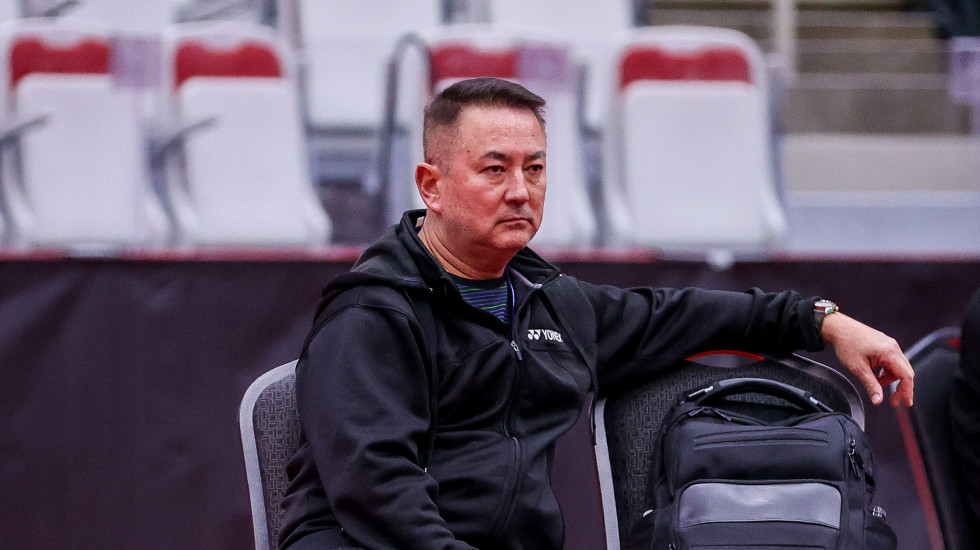
For some four decades now, Ben Lee has been experiencing first-hand the evolution of badminton in the US.
First as a player – Lee was a nine-time national champion, Pan Am titlist and participant at badminton’s Olympic debut at Barcelona 1992 – then as head coach of the US team for London 2012, founder of Synergy Badminton Academy, and just as significantly, as parent to two international players, Lee has been in the thick of things as far as badminton’s journey in the US is concerned.
With his daughter Allison and son Arden, Lee is now experiencing the varied emotions of being a badminton parent. Sitting in the gallery for Arden’s matches during the BWF World Junior Championships last month, Lee talks about his early days in the sport, watching US badminton grow, and what it means for the country’s players with LA 2028 coming up.
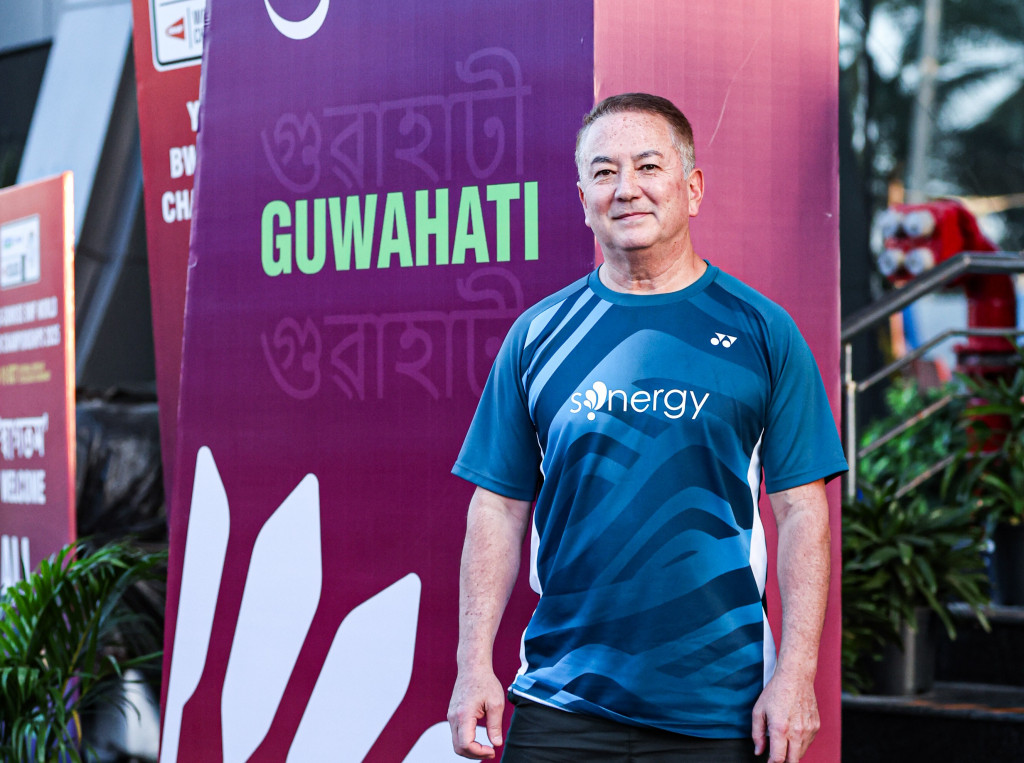
What was the badminton scene in the US when you started playing?
It was almost non-existent. It was probably more popular in high schools, and there weren’t many top players. I was probably one of the first to come out of the US. Over the years the sport started to grow, and then more badminton clubs started to open. So actually, it’s the development of all the clubs that built the sport.
There were no academies. We practiced in schools, at the school gymnasium when they had hours for badminton. It was very challenging.
I moved to Europe before the Olympics in 1992. I lived and trained in the Netherlands for a year.
Now it’s so nice to see the sport grow and players are able to make a living from badminton. Even coaching. I mean, 20 years ago, if you told me that coaches were going to make a living in the US … but now it’s a reality. Many coaches actually come to the US for coaching opportunities, which is great to see.
What do you make of the circuit now, compared to your playing days?
I really like that a lot of the tournament culture has been retained, for example, the All England. The atmosphere is just amazing, and it’s always been like that. It’s such a traditional tournament, like the World Championships, the Japan Open. So I’m really happy to see the tournament culture maintain its integrity.
And of course, the players are getting faster and stronger. Technology and equipment are getting better. So I can see the sport really, really growing on a continuous basis.

Despite winning the World Championships gold (men’s doubles) in 2005 in Anaheim, badminton in the US never seemed to take off. What happened?
Badminton is not really a mainstream sport in the US. It just doesn’t get the attention it deserves. Right now, the sport is not sanctioned by the NCAA.
It’s considered a club sport, but on the club level, it’s actually quite big and quite popular, but it just doesn’t have enough support from the colleges. It would be nice if, let’s say, they offered scholarships for players, then they would at least have a pathway to go after high school. Because right now, what’s happening is that you can see, especially in Pan Am, the USA actually do very well in the younger events, but once they reach the high school or college level, the focus is more on career.
Is LA 2028 going to change that? Will it give players inspiration to keep going competitively?
I hope so. The interest is definitely there from a lot of US players. But my hope is not just for the participation to grow for 2028 but for it to sustain afterwards and build from there something longlasting.
We have a lot of great coaches in the USA now, as opposed to many years ago, but it’s also the sparring. When you are training in a country like Indonesia or China, there are so many good players. It makes sparring easier. In the US, we just don’t have that depth.
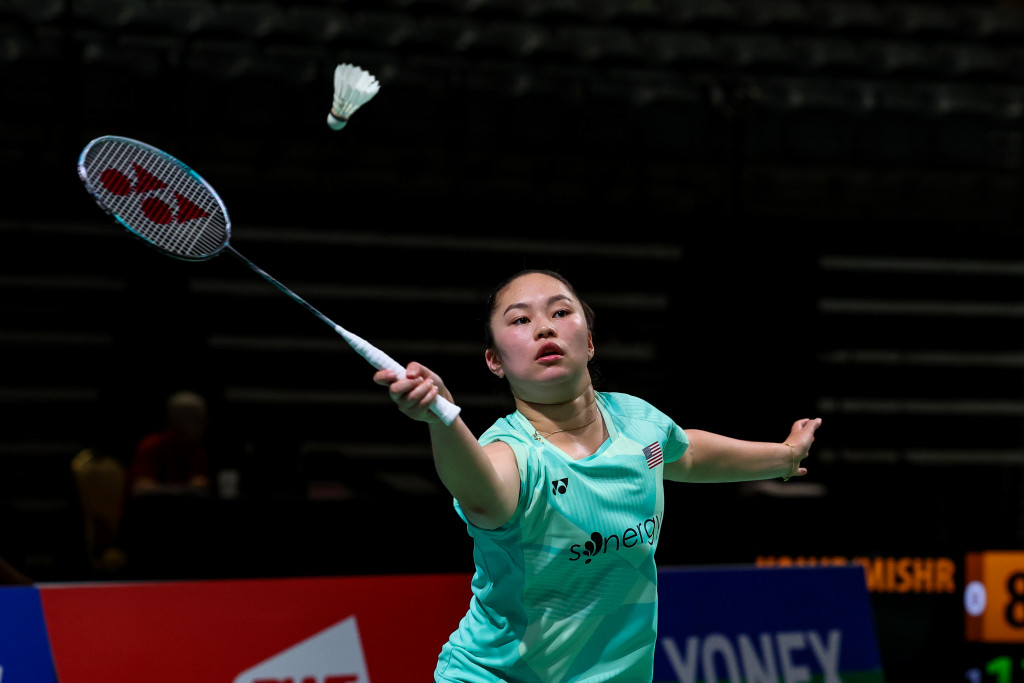
Allison Lee in action.
In terms of the physical side of training, is there a big difference in the knowledge available in the US compared to Asia?
I would say, in the US, the professional athletic trainers are excellent. They’re among the world’s best. But Europe and Asia are definitely ahead in terms of being a sport-specific training preparation. They had a big head start, so now at least we are starting to get there.
The club ecosystem is very strong in the US. Are you optimistic about how healthy it is and whether it will keep generating talent?
I think so. As long as the interest is there, it will continue to grow, but it’s not as easy as people think. It’s a lot of hard work, just like in anything else, to develop the sport and the clubs getting involved. It’s a lot of work, but I do feel encouraged.
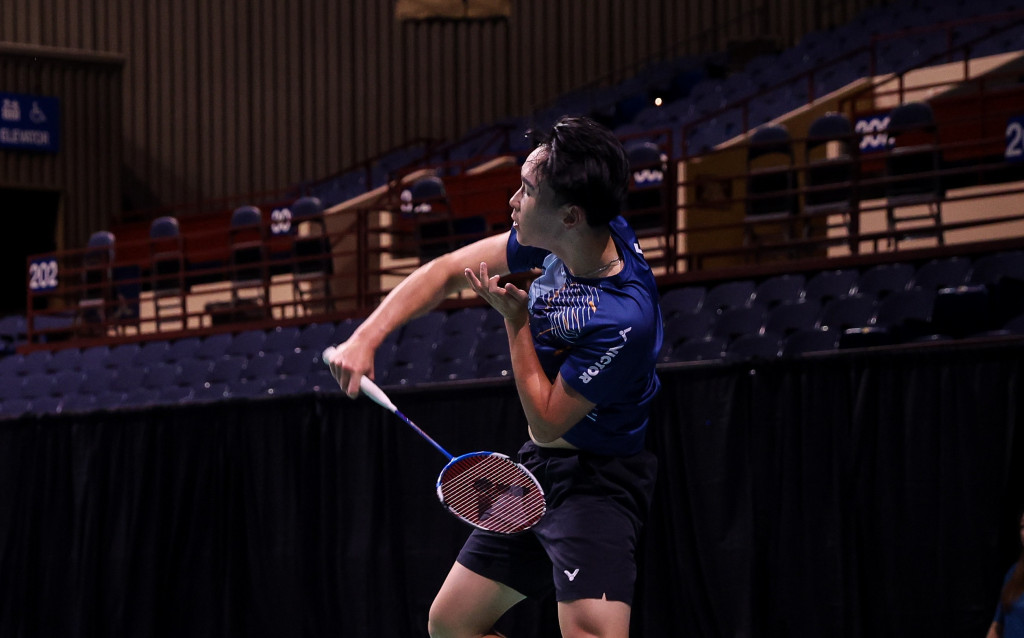
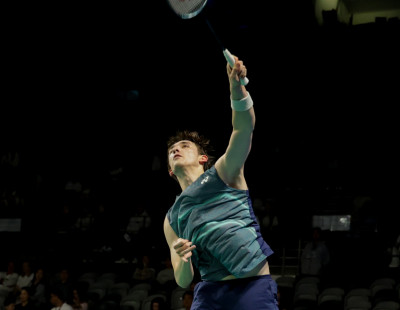
Arden Lee in action.
Your kids Allison and Arden have followed you into the sport …
When my kids were young, I got them exposed to different sports – soccer, taekwondo … badminton was just one of the sports, and they just seemed to gravitate to it. Even though I was a player, I never forced them to play badminton. Of course, with the academy, it just made it easier. I would have supported whatever sport they wanted to pursue.
The goal for Allison is really just to develop herself, to become the best that she can be herself, and see where it goes from there.
With Allison, I feel very fortunate that at least we can support her, sending a coach with her, but that’s all we can do right now. You see a lot of these teams in Asia. They have more than multiple coaches, they have physios, they have a whole system. We are still far from that.
Are you encouraged by how far the US have come?
The US have come a long way. So it’s nice to see the development, at least in my lifetime.
It’s nice to see the US players get some respect. I’m not trying to degrade myself, but at the time that we were playing, a lot of the international players against us, I don’t think they felt as threatened. It’s starting to change now. It’s a bit different. Nobody takes us for granted anymore.
 BWF Newsletter