

Guwahati was the stage for the two-week long YONEX SUNRISE BWF World Junior Championships 2025 featuring the mixed team relay event (3-11 October) followed by the individual championships (13-19 October). Here are the main themes that played out:
China Step up to the Challenge
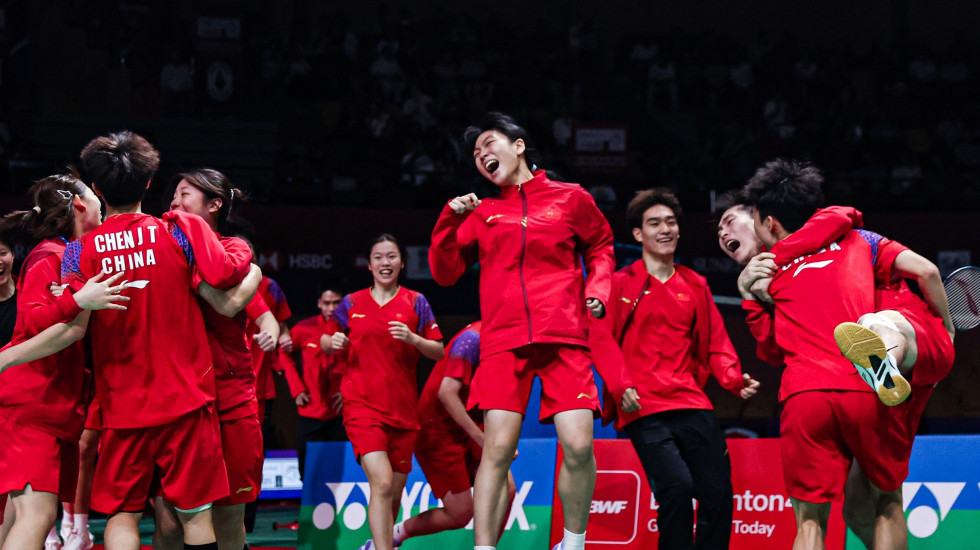
China’s success at the World Juniors – they won the Suhandinata Cup team event and three individual gold medals – proved that with the right preparation, the best team would still prevail despite the diverse challenges of innovative scoring systems.
It wasn’t all smoothsailing for China, though, as they were severely tested in a tense semifinal by Japan. After a close first set win for China, Japan stormed back, with Yuzuno Watanabe, Kazuma Kawano and Shuji Sawada the standout players in their 45-38 second set win. Watanabe once again gave Japan a narrow lead in the opening women’s singles of the third set, but this time the remaining Chinese players held the fort. It all came to a boil in the final men’s doubles: Kawano and Sawada went in against Chen Jun Ting/Liu Jun Rong with Japan behind by nine points; the Japanese duo steadily narrowed the gap, but the Chinese duo just about managed to pip them at the post, 45-42.
The final, against Indonesia, was a different challenge. China comfortably took the opening set 45-30 but Indonesia stayed close in the second. A tactical switch in the men’s doubles by Indonesia worked as Muhammad Rizki Mubarrok/Raihan Daffa Edsel Pramono very nearly stole the set from Chen Jun Ting/Liu Jun Rong. The Chinese survived set point and captured the tie at the first opportunity, 45-44, bringing the team event to an exciting conclusion.
Similarly, in the individual championships that followed, China weathered the storms that came their way to take three gold medals.
New Possibilities
The most talked-about topic over the course of the team and individual events was the innovations to the scoring system. A new, updated relay system was used in the mixed team tournament with the best of three sets up to 45 points, with each set comprising five matches – one of each event from men’s singles, women’s singles, men’s doubles, women’s doubles and mixed doubles. The individual tournament that followed saw an innovative 3×15 scoring system.
While there were – expectedly – diverse opinions on the innovations, there was little doubt that each tie in the team event was engaging from start to finish. The consensus on the 3×15 scoring system in the individual event was that it had quickened the pace of the game, and players would have to be on their toes from the first point.
Emerging Nations: Cause for Optimism
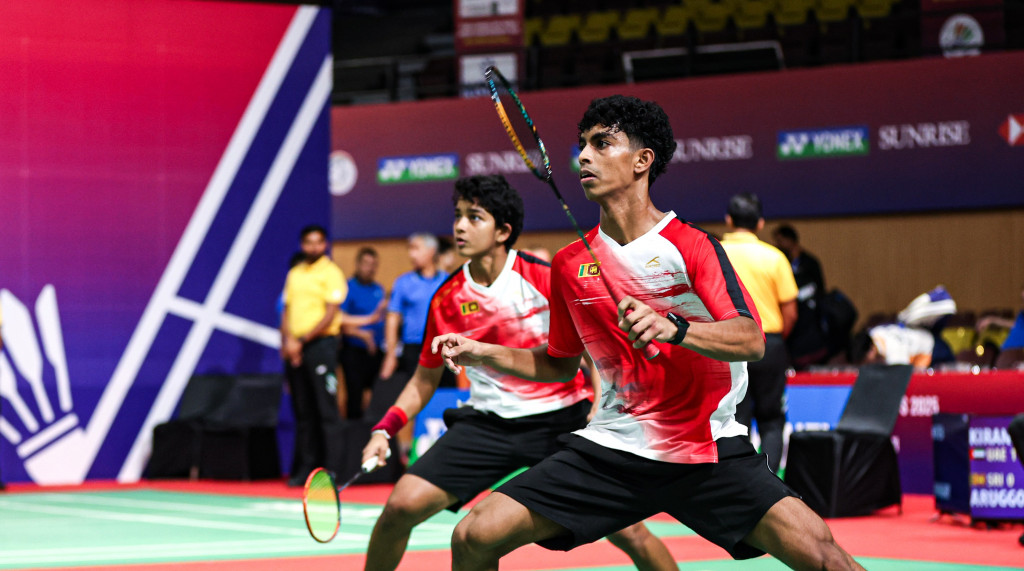
Ranithma Liyanage (left) and Keneth Arugodda of Sri Lanka.
USA continued to grow as an emerging force, topping their group by beating Vietnam, Norway, Egypt and France, before pulling off a memorable upset of Korea to finish seventh overall.
The emerging team that showed the most dramatic improvement was Philippines, which finished in the top 10 – their best ever performance (they were 25th last year). Philippines finished second in Group F beating Hong Kong China and Slovenia. In the battle for positions 9-16, Philippines took down no less a team than Denmark, followed by Sri Lanka, both in straight sets. A loss to Thailand would see them finish 10th in the overall standings.
Sri Lanka too were impressive as they beat UAE and Nepal in their group before beating Poland to finish 12th overall – an improvement of seven places.
Stars for the Future
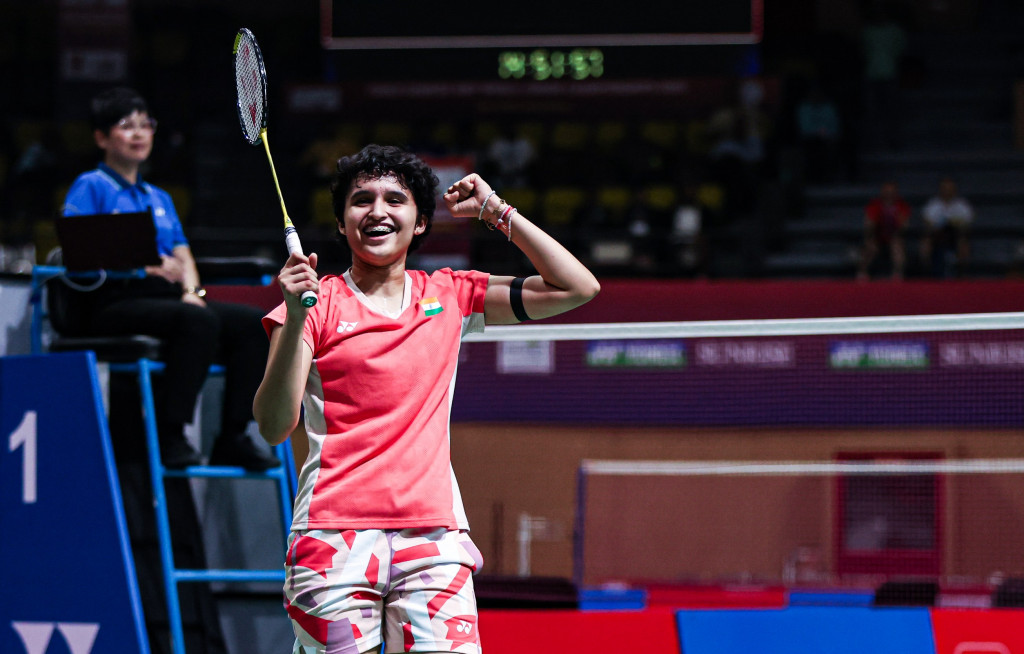
Unnati Hooda of India.
Among the most impressive players to emerge at the mixed team event was Philippines’ lefthander Jamal Rahmat Pandi, who played a staggering 36 matches, featuring in men’s singles, men’s doubles and mixed. For Sri Lanka, two young stars emerged – Ranithma Liyanage and Keneth Aruggoda, who shouldered their country’s campaign to 12th place. Liyanage was one win away from a historic medal at the individual championships. Among others to make an impression were Thibault Gardon and Mady Sow (France); Audrey Chang and Garret Tan (USA); Tanvi Sharma, Unnati Hooda and Tankara Gnana Dattu Talasila (India); Moh. Zaki Ubaidillah and Richie Duta Richardo (Indonesia), Low Zi Yu (Malaysia); Lee Hyeong Woo, Cheon Hye In and Cho Hyeong Woo (Korea); and Liu Yang Ming Yu, Chen Jun Ting, Liu Jun Rong, Tan Ke Xuan and Wei Yue Yue (China).
Bonding Beyond Badminton
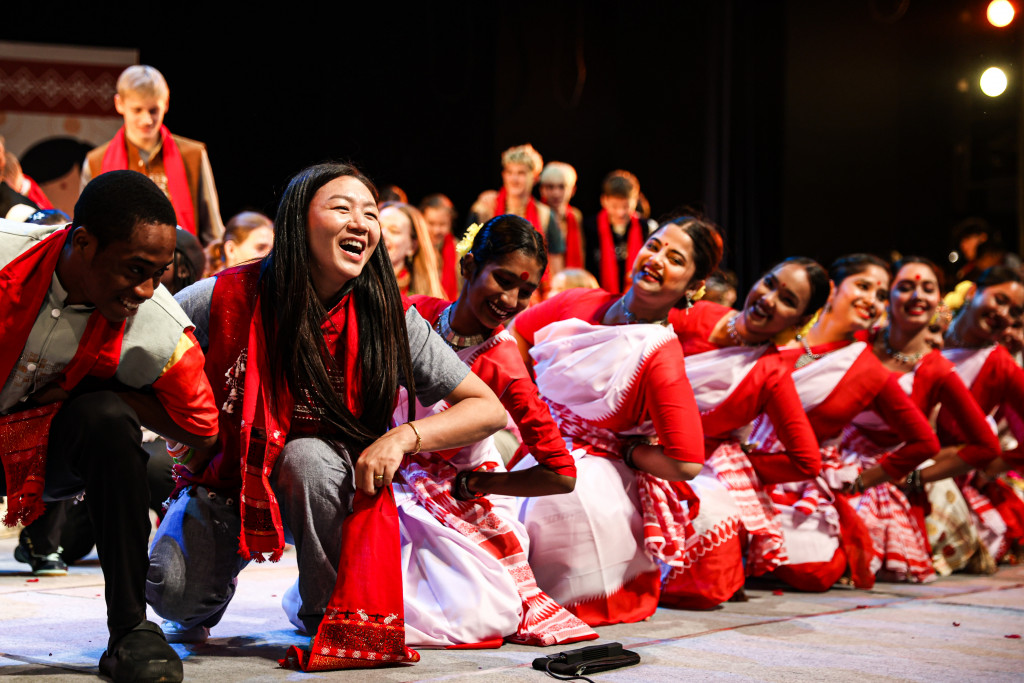
Cultural Day participants performing in a show.
Guwahati, the capital of the state of Assam – famous for its tea, silk and one-horned rhinos – welcomed over 400 players from 36 teams. The participants were treated to a sample of Assam’s diverse cultures on Cultural Day – the rest day in between the team and individual championships. Treated to a show of songs and dance and local cuisine, the highlight of the day saw the participants invited on stage to shake a leg along with the dancers. That spirit of camaraderie persisted throughout the championships, with players from different teams bonding with each other.
Training Camp
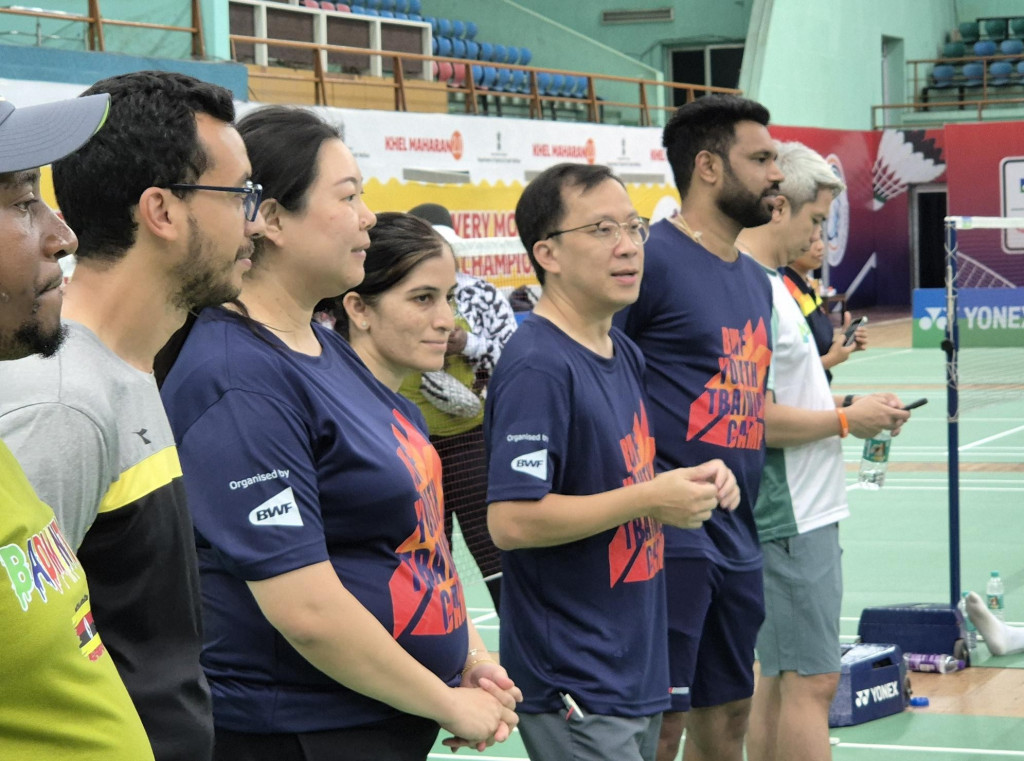
Coaches at the training camp.
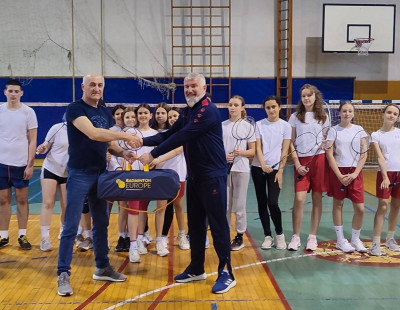
Prior to the start of the team championships, a three-day BWF Youth Athlete Development Camp was held for 38 players and 10 coaches from six countries – Bhutan, Egypt, Ghana, Philippines, Sri Lanka and Uganda. The players and coaches received on-court training on technical and tactical aspects from BWF expert coaches Jiang Yanmei, Chua Yong Joo of Singapore, and Indian coaches Arun Vishnu and Sayali Gokhale. A test event, featuring the 3×45 system, was played between the teams, and that helped prepare the players for the Suhandinata Cup. Besides this, the participants attended a Shuttle Time Youth Leadership Workshop, IOC Athlete 365 Career+ Workshop, info sessions on topics such as BWF BeyondBadminton, Integrity, and Health & Performance by Simply Sport Foundation. These sessions helped them visualise topics of importance beyond just badminton, and into planning long-term careers, and navigating tricky terrain in their professional and personal lives.
 BWF Newsletter