

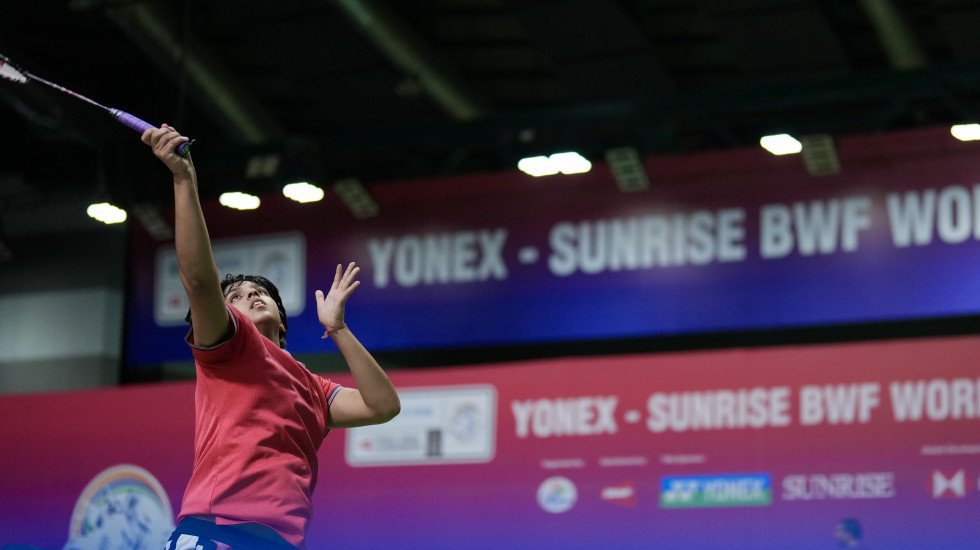
As Guwahati put its final touches on Sunday to unveil the 21st edition of the YONEX SUNRISE BWF World Junior Mixed Team Championships tomorrow, participating teams fine-tuned their adjustments for the special requirements of a new format.
Around 400 players from 36 teams are set to compete in the team championships, which will see an innovative scoring system in play. Each tie will be contested for the best of three sets up to 45 points, with each set comprising five matches – one each from men’s singles, women’s singles, men’s doubles, women’s doubles and mixed doubles. The overwhelming sentiment among teams was that the tournament could see close contests as even the traditional powers could be pushed hard by upcoming rivals.
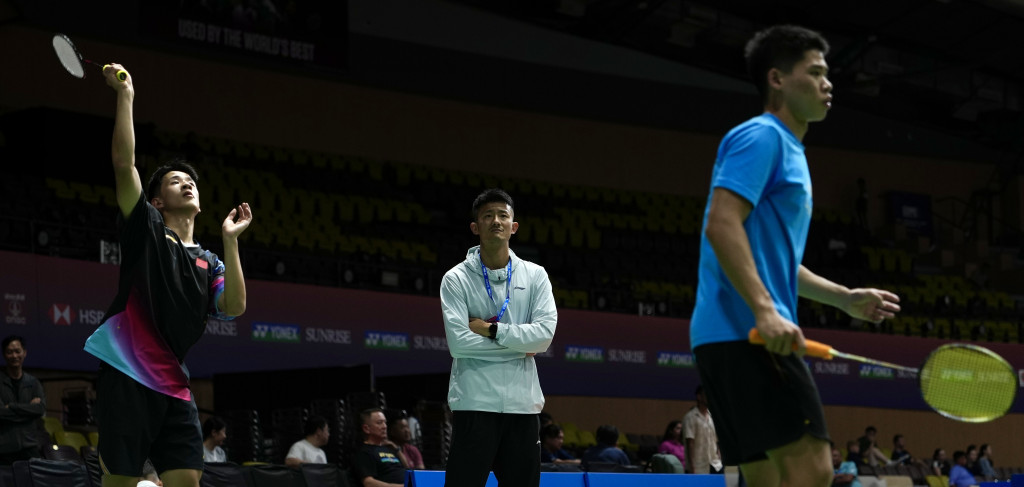
China coach Chen Long
This possibility, of the unpredictability of outcomes, lent a certain buzz to the proceedings at the venue when the teams went through their practice sessions.
USA Assistant Coach Sai Praneeth was certain that upsets were in the offing.
“It’s a good chance for anyone to cause an upset, if they are decent enough,” said Praneeth, who is on his first official assignment since relocating to the US over a year ago. “It’s a new format and everyone will be under pressure from the first point. Even a top player will be under pressure if he loses a couple of points; besides, there is also the pressure of a team event.
“You need to be in an attacking position all the time. You can’t rely on your fitness. You have to be on your toes from the beginning.”
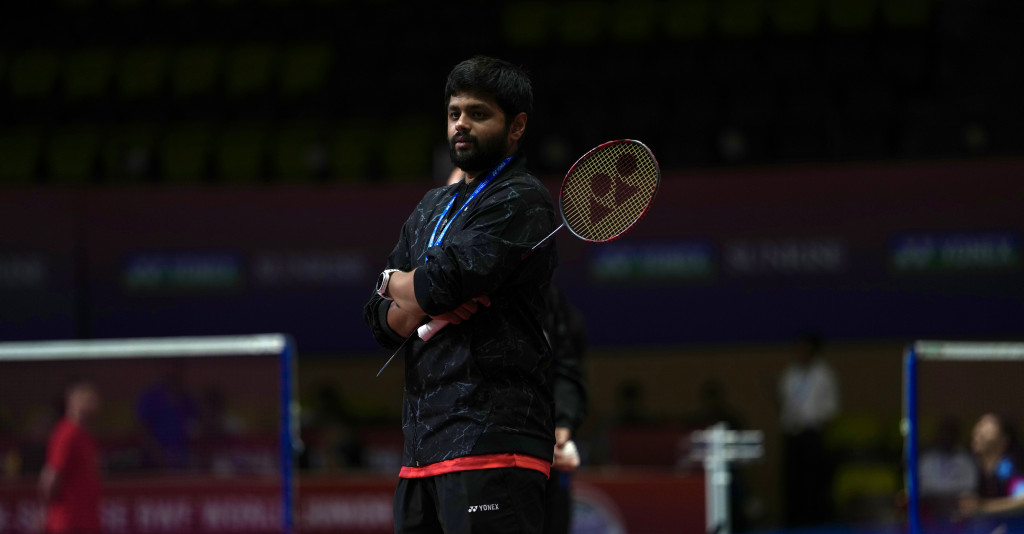
USA coach Sai Praneeth
While teams like Hong Kong China and India had trialled the system within their teams, six developing teams – Bhutan, Egypt, Ghana, Philippines, Sri Lanka and Uganda – had actually conducted a test tournament during a BWF development training camp last week.
Sri Lankan coach Thushira Amarathunga was optimistic about the possibilities his team had in this format, and what the event meant for his young players.
“It’s a pleasure for us to be here at such a big event. It’s a good opportunity for Sri Lanka,” said Amarathunga.
“The training camp was very good for us; we met different coaches and players and were introduced to new training methods. We played the new scoring system — it’s different, and it’s fast, and you can’t afford to make mistakes. This gives us an opportunity against stronger teams.”
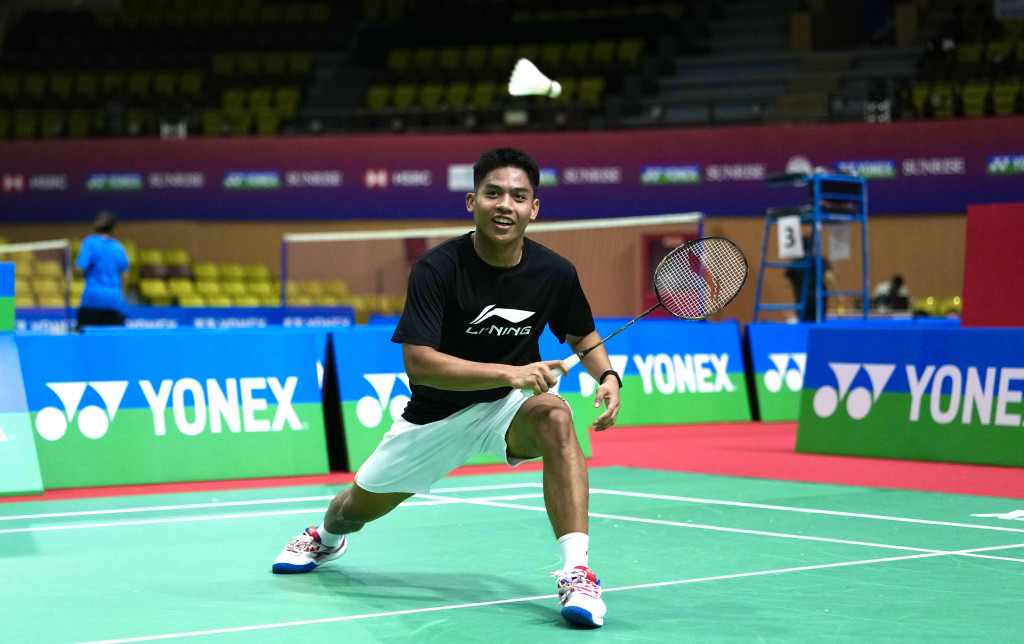
Indonesia’s Zaki Ubaidillah
For BWF, the World Junior Championships offer multiple possibilities beyond being a platform for the best junior talent to be celebrated. BWF President Khunying Patama Leeswadtrakul emphasised that innovation to the traditional scoring system was considered to protect athletes.
“We are delighted to present a forward-thinking championships promoting innovation for badminton and reflecting a progressive and modern approach by BAI, Guwahati and BWF,” said Leeswadtrakul.
“These new scoring initiatives are designed to modernise badminton in ways that protect athlete wellbeing while making the sport even more exciting and engaging for global audiences.”
BWF Secretary General Thomas Lund asserted that, while the changes were part of BWF’s long-term considerations for innovation in events, they would only be implemented after taking into account the opinions of diverse stakeholders.
“It is essential that this process remains inclusive and well-informed, with any future decision guided by evidence, wide consultation, and what is in the best interest of badminton worldwide,” said Lund.
FAQs on Scoring Format (For More Details, Click Here)
What is the scoring system in each tie?
The competition will be held according to a team relay system (3 x 45). Each tie is played to the best of three sets, and each set is played to 45 points.
- A set is won by the side that first scores 45 points.
- A set consists of one match each of men’s singles, women’s singles, men’s doubles, women’s doubles and mixed doubles. The order of the matches within each tie is determined beforehand by the referee in consultation with the respective team managers according to set protocols. The order of play for the five matches, once determined, will be the same for set 1, set 2, and if required, set 3.
- Each match within a set is played to 9 points (9, 18, 27, 36 and 45).
- The first match in a set starts at love-all and ends when one side reaches 9. The second match starts at the ending score of the first match and continues until one side reaches 18. The subsequent matches follow this pattern, with the matches changing when one side reaches 27 and 36, with 45 being the final point.
- If the score becomes 44-all, the side scoring the 45th point shall win that set.
- The side leading at the end of a match shall serve first in the next match. The side winning a set shall serve first in the next set.
 BWF Newsletter