

At the 86th BWF Annual General Meeting last month, Poul-Erik Høyer stepped down as BWF President, and was awarded the position of Honorary Life Vice President by the BWF Membership. Høyer’s 12-year tenure was an eventful period that saw BWF achieve several milestones. A tribute to the 1996 Olympic gold medallist, administrator and charismatic badminton ambassador, published in the latest edition of Shuttle World:
Nice guys aren’t supposed to finish first. Particularly those in sports, which demands self-obsession, where results are the only metric that matters.
Yet, from the time anyone can remember, Poul-Erik Høyer has been a nice guy. He was always well-behaved on court, and he was empathetic.
His finest moment as a player – winning the Olympic gold medal at Atlanta 1996 – showcased his empathy better than anything else, when he commiserated with the beaten finalist, Dong Jiong, on the podium.
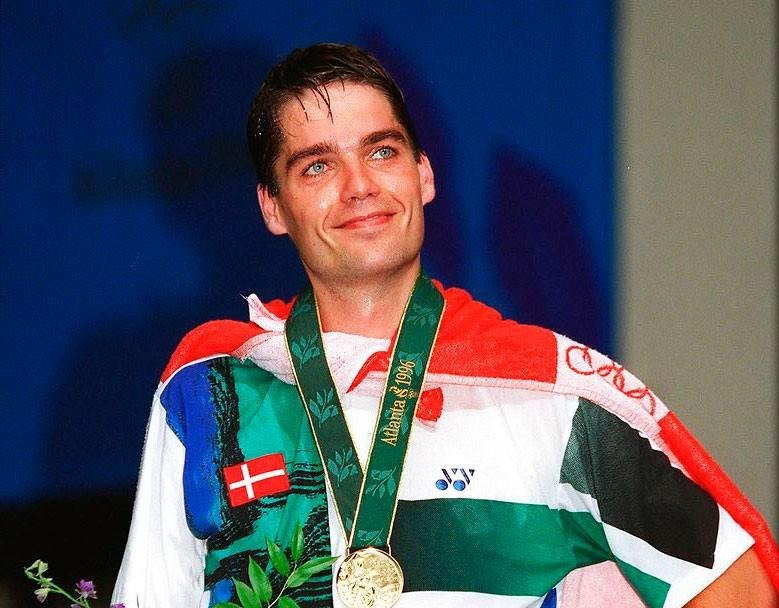
Poul-Erik at Atlanta 1996
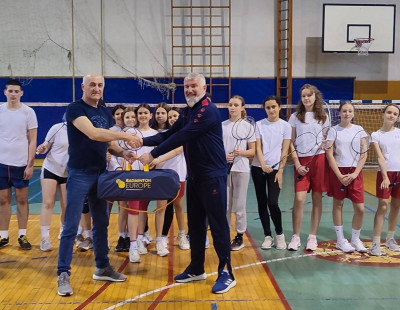
With most people, being nice and being a leader might not easily sit together. Høyer was the exception in this too, as he did not shy away from representing players during his playing career. In his post-playing career, his particular ability to reach out and take people along saw him achieve extraordinary success.
Torsten Berg, BWF Honorary Life Vice President, recalls that the Council of Badminton Europe (BE) were somewhat sceptical when he decided to stand for BE President in 2010, but he won them over as soon as he addressed them the first time.
The impression he made as BE President over the next three years paved the way for his Presidency of BWF in 2013 and becoming IOC Member the following year. One of his accomplishments as BE President was for BE to buy in 2012 the property they still operate out of today.
Berg traces Høyer’s ability to win over associates to his willingness to listen to varied opinions and a non-confrontational approach. These traits were well in evidence all through his three terms as BWF President – a period of internal harmony and success on multiple fronts, including strengthening badminton’s position at the Olympics, and commercial success with the BWF World Tour and the Major Championships. He was a passionate driver for Para badminton’s inclusion in the Paralympics, and that was to become a reality with its debut at Tokyo 2020.
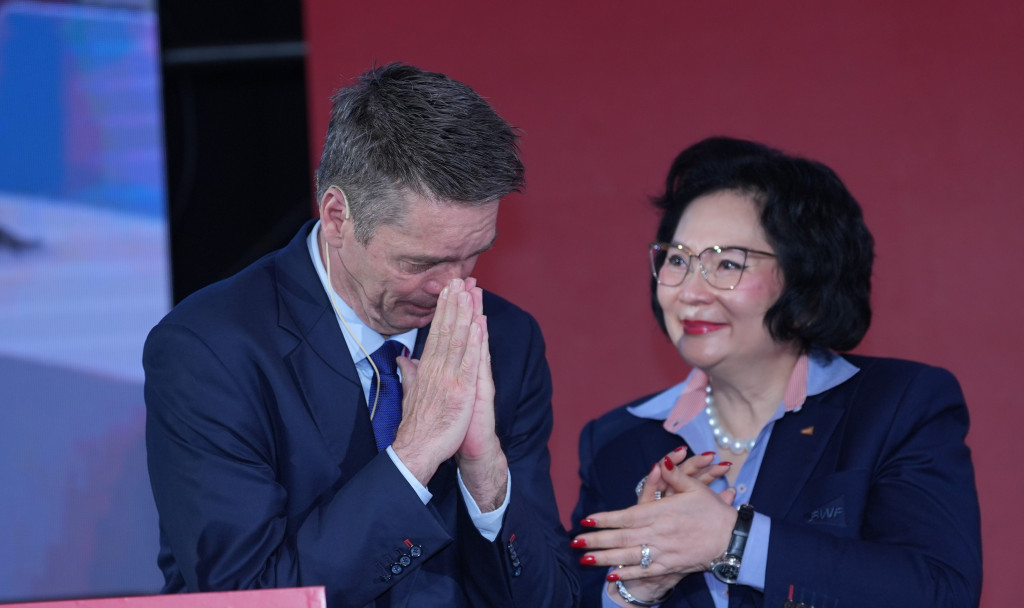
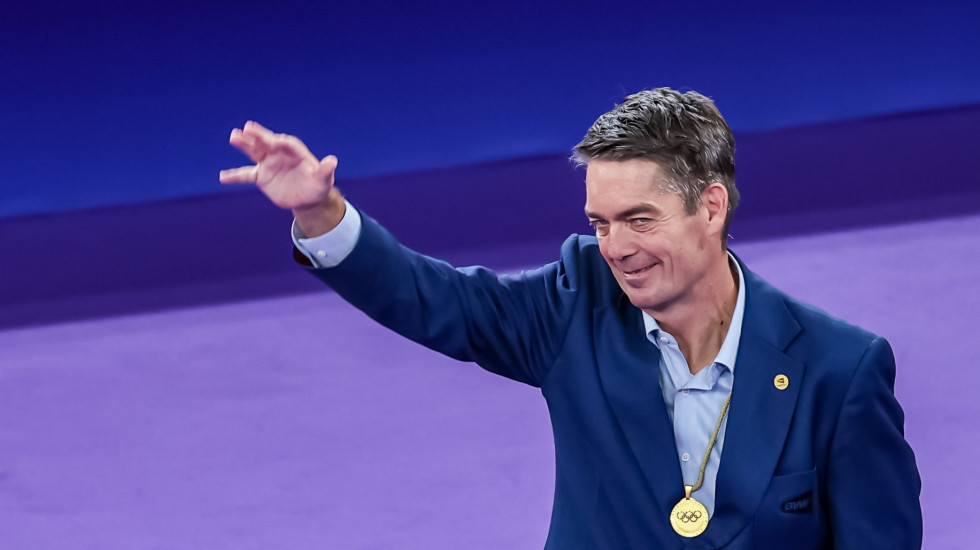
Poul-Erik at the 86th BWF AGM, signing off on a successful 12-year stint as BWF President
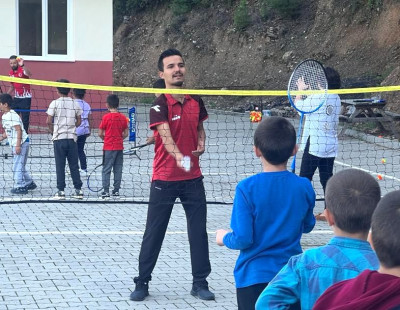
The innovation of badminton as an outdoor sport happened during his tenure, enabling its adoption outside traditional badminton venues.
BWF’s Citation for his induction as Honorary Life Vice President reads: “As Chair of Council from 2013 to 2025, Poul-Erik Høyer led the Council through one of the most extraordinary periods of growth and development. This period saw significant enhancements in the quality of event presentation, the increased commercial value of BWF’s event properties, partnerships with global brands as well as continuous improvements in governance practice. Poul-Erik has been a passionate supporter of BWF’s development initiatives and BWF’s vision of “giving every child a chance to play badminton for life”.
Khunying Patama Leeswadtrakul, his successor as BWF President, had warm words on his legacy, highlighting his lasting impact: “Thank you for everything that you have done for badminton – as BWF President, and besides that, as player and administrator, and of course, for being a wonderful person. I have taken the baton of the BWF Presidency from you, and I must say it is a great responsibility. You have set high standards for us to follow.”
As Poul-Erik Høyer steps into a new chapter of his life, BWF wishes him the very best.
 BWF Newsletter